
The fastest relief for postpartum dry skin comes from layering a humectant, an emollient, and an occlusive onto damp skin, right after cleansing, while cutting out hot showers. If you’re breastfeeding, keep strong actives off your chest and nipples, and wipe any medicated product off before the next feed. See a clinician if cracking turns to bleeding, redness spreads, or you notice fatigue and weight changes alongside the dryness.
TL;DR:
- Most postpartum dryness peaks around two months after delivery and generally improves as hormones stabilize over the following months.
- A consistent skincare routine emphasizing sequencing—humectant, emollient, then occlusive—yields better results than relying on one product alone.
- Applying moisturizer within three minutes of showering prevents rapid water loss and enhances hydration retention.
- Severe cracking, redness, or accompanying symptoms like fatigue may indicate underlying thyroid issues or dermatitis requiring medical attention.
- Using natural occlusive balms, such as whipped beef tallow, can effectively seal in moisture and support barrier repair without harsh actives.
Table of Contents
- Why Does Postpartum Dry Skin Happen?
- How Long Does Postpartum Dry Skin Usually Last?
- What’s the Best Skincare Routine After Pregnancy?
- How Do You Treat Cracked Hands and Sore Nipples Postpartum?
- Which Ingredients Help (and Which to Avoid While Breastfeeding)?
- Do Humidifiers and Hydration Really Help Postpartum Skin?
- Why an Occlusive Like Tallow Balm Fits the Postpartum Routine
- What the Research Actually Supports (and What It Doesn’t)
- Which Lord’s Love Butter Option Fits Your Postpartum Routine?
- Sources
- FAQ
Why Does Postpartum Dry Skin Happen?
Blame your hormones first. Estrogen drops fast after delivery, and that plunge cuts your body’s output of hyaluronic acid, collagen, and elastin, the molecules that normally hold water in your skin. The result is transepidermal water loss, or TEWL, which is the technical term for how fast moisture escapes through your skin into the air. The faster it escapes, the tighter and flakier your skin feels.
Breastfeeding piles on a second layer of stress. Nursing pulls fluid out of your body to make milk, so your skin is competing with your baby for hydration. Prolactin, the hormone driving milk production, also tends to suppress estrogen further, which can stretch out the dry, tight feeling for months longer than it would otherwise last.
A few related conditions can make things worse or get mistaken for ordinary postpartum dryness:
- Postpartum thyroiditis, which shows up in a meaningful share of new mothers and often includes dry skin as an early sign.
- Eczema or contact dermatitis, frequently triggered by the constant handwashing and sanitizer use that comes with caring for a newborn.
- Simple environmental dryness, from indoor heating, air conditioning, or long hot showers that strip natural oils faster than a compromised barrier can replace them.
None of this means something went wrong with your recovery. It means your skin’s usual moisture-retention system took a hormonal hit at the exact moment your daily habits (handwashing, night feeds, less sleep) are working against it too.
How Long Does Postpartum Dry Skin Usually Last?
Most women see dryness peak around two months after delivery, then gradually ease as hormones start to level out over the following months. That timeline lines up with when transepidermal water loss tends to peak, so if week eight feels like the worst of it, that’s normal, not a sign something is off.
One condition worth knowing about by name: postpartum thyroiditis. It affects roughly a share of women in the U.S., and its hypothyroid phase, which commonly causes dry skin among other symptoms, tends to appear four to eight months after birth. The encouraging part is that most women recover within 12 to 18 months without lasting thyroid damage.
Regular hormonal dryness doesn’t need a doctor’s visit. But certain signs do:
- Cracking that bleeds or won’t close, especially on hands or nipples.
- Widespread redness or itching that spreads rather than staying in one patch.
- Open sores or skin that weeps fluid.
- Fatigue, unexplained weight change, or hair thinning alongside the skin symptoms, which can point toward thyroid involvement.
Persistent, severe dryness with redness or cracking can also signal postpartum eczema or contact dermatitis, conditions that respond better to a dermatologist’s plan than to more moisturizer alone. If your skin isn’t responding to consistent barrier care after a few weeks, that’s the moment to call your OB/GYN or a dermatologist rather than waiting it out.
What’s the Best Skincare Routine After Pregnancy?
Dermatologists point to a three-step method for repairing a damaged skin barrier: humectants, emollients, and occlusives, applied in that order. Humectants pull water into the skin. Emollients smooth and repair the barrier itself. Occlusives seal everything in so it doesn’t evaporate before it does its job. Skipping the order, or skipping a step, is why a lot of postpartum skincare routines feel like they’re not working when the ingredients are actually fine.
Here’s the sequence that gets the best results with the least effort:
- Cleanse gently. Use a mild, pH-balanced wash that doesn’t leave your skin feeling tight or squeaky. Keep showers warm, not hot. Hot water strips the oils your skin desperately needs right now.
- Apply a humectant to damp skin. Hyaluronic acid or glycerin work best within a few minutes of stepping out of the shower, while skin is still slightly wet. That dampness is what the humectant grabs onto.
- Layer an emollient. Ceramides or squalane rebuild the barrier itself, smoothing rough patches and calming irritation.
- Seal with an occlusive. Petrolatum, shea butter, or a whipped tallow balm locks the previous two layers in place so moisture can’t escape overnight or between feeds.
- Reapply on hands after every wash. New parents wash their hands more than almost anyone else on the planet, and that habit alone can undo the rest of the routine if you skip this step.
For a short version, keep a tube of hand cream by every sink in your house and a jar by your bed for a thirty second face and body pass before lights out. For the fuller night routine, budget about two minutes: a fingertip-sized amount of product for your face, a palm-sized amount for arms or legs.
Travel changes what you reach for. A tin fits in a diaper bag or fits into a stroller pocket without leaking; a jar makes more sense parked on your bathroom counter for daily use. If you’re not sure which format fits your day, how natural balms lock in moisture breaks down what an occlusive is actually doing on your skin, and applying moisturizer to damp skin after a shower walks through the timing in more detail.

Pro Tip: Keep your post-shower window under three minutes. Water on your skin evaporates fast, and that three-minute mark is roughly when the “damp skin” advantage disappears.
How Do You Treat Cracked Hands and Sore Nipples Postpartum?
Hands and nipples take the worst of it, and each needs a slightly different approach.
Hands. Moisturize after every single wash, not just once a day. A fragrance-free ointment holds up better than lotion against water exposure this frequent, and it’s frequent handwashing that drives most postpartum hand eczema in new caregivers. If cracking is bad, apply a thick layer before bed and sleep in thin cotton gloves. It sounds fussy. It works overnight in a way daytime application can’t match.
Nipples. Stick to nipple-safe lubricants between feeds, and if a doctor has prescribed a topical steroid for nipple eczema, apply it right after nursing and wipe it off before the baby latches again. Plain lanolin or a gentle, food-grade balm can work as a stopgap between medicated applications, but check with your pediatrician or OB before combining products on skin your baby will feed from.
Elbows, knees, and heels. These spots dry out fastest because they have fewer oil glands to begin with. Reach for the heaviest occlusive you own here rather than rationing your usual moisturizer, and hold off on scrubs or exfoliating acids until the flaking calms down. Exfoliating an already-compromised barrier just opens more cracks for water to escape through.
Which Ingredients Help (and Which to Avoid While Breastfeeding)?
Read labels through the same three-part lens: humectant, emollient, occlusive. That’s the shortcut dermatologists actually recommend instead of memorizing brand names, and it holds up whether you’re standing in a drugstore aisle or scrolling online at 2 a.m. during a feed.
Look for:
- Hyaluronic acid or glycerin (humectants) to pull moisture in.
- Ceramides or squalane (emollients) to repair the barrier itself.
- Petrolatum, shea butter, or tallow (occlusives) to seal moisture in overnight.
- Niacinamide or low-concentration vitamin C, both generally considered fine to layer in once the barrier feels steadier.
Avoid or use cautiously, especially on skin your baby contacts:
- High-strength retinoids, which most dermatology guidance suggests skipping while breastfeeding.
- Concentrated chemical exfoliants (strong glycolic or salicylic acid formulas) on freshly compromised skin.
- Added fragrance, a common irritant that general patient guidance from the Mayo Clinic flags as worth minimizing when skin is already reactive.
One-line label check: if you can’t tell whether a product is a humectant, emollient, or occlusive within five seconds of reading the ingredient list, put it back and grab something simpler. For a deeper walk-through on scent and sensitivity, this fragrance-free versus unscented breakdown is worth five minutes.
Do Humidifiers and Hydration Really Help Postpartum Skin?
Topicals only do half the job. What’s happening in your house and your water bottle matters just as much.
Drink more than you think you need, especially during and right after nursing sessions, since breastfeeding pulls fluid out of your body faster than most new mothers realize. Keep a water bottle wherever you feed the baby so sipping becomes automatic instead of one more thing to remember.

Run a humidifier in your bedroom or nursing nook, particularly if you’re dealing with forced-air heating or air conditioning, both of which strip humidity from indoor air. And swapping a long hot shower for a shorter, cooler one protects the same oils your moisturizer is trying to replace. None of this requires new gear or a bigger budget. It just means treating your environment as part of the skincare routine, not separate from it.
Sleep debt raises cortisol, and elevated cortisol slows the skin’s ability to repair its own barrier. You won’t fix a newborn’s sleep schedule this week. But a fifteen minute nap when someone else has the baby, or simplifying your evening routine down to the five-step sequence above, gives your skin a real shot at catching up. For more recovery-focused ideas beyond skincare, this postpartum comfort guide covers the fourth trimester more broadly.
Why an Occlusive Like Tallow Balm Fits the Postpartum Routine
The occlusive step is where a lot of routines quietly fail, either because the product feels too greasy for daily use or because it doesn’t hold up through a full night of feeds and diaper changes. Whipped beef tallow behaves similarly to skin’s own lipids, which is part of why it can sit on top of a humectant and emollient without feeling heavy, while still sealing moisture in.
Lord’s Love Butter makes its whipped beef tallow balm with Manuka honey and propolis, grass-fed and free of synthetic additives, formulated for whole-body use including sensitive skin prone to eczema or psoriasis. A few practical notes for postpartum use:
- Apply to face or body as the final step after your humectant and emollient, while skin is still slightly damp.
- If you’re nursing and using any medicated product on or near your chest, wipe the area before the next feed regardless of which occlusive you use.
- It layers fine under or over a hyaluronic acid serum; just give the serum a minute to absorb first.
What the Research Actually Supports (and What It Doesn’t)
Most postpartum skincare content treats moisturizer as one product you buy once. The actual dermatology guidance treats it as a sequence, humectant, emollient, occlusive, and that distinction is where most routines quietly fail. Buying a great cream and slathering it on dry skin does less than applying a mediocre one to damp skin in the right order.

The bigger gap I see in conventional advice: it rarely addresses breastfeeding safety with any specificity. Generic “avoid harsh chemicals” advice doesn’t tell a nursing mother what to actually do about a prescribed nipple cream. The wipe-before-feeding guidance matters far more in practice than another warning about parabens.
If you take one thing from this article, prioritize the sequence over the brand. A $12 humectant, a basic emollient, and a solid occlusive, used correctly on damp skin every night, will outperform an expensive single product used the wrong way. Tallow-based balms earn their place here as an occlusive option grounded in the same three-part logic dermatologists already recommend, not as a replacement for it.
— Michael
Which Lord’s Love Butter Option Fits Your Postpartum Routine?
Lord’s Love Butter is the barrier-repair alternative to synthetic, fragrance-loaded lotions for postpartum skin, especially if you’re avoiding harsh actives while nursing: it’s grass-fed tallow with Manuka honey and propolis, nothing else added.
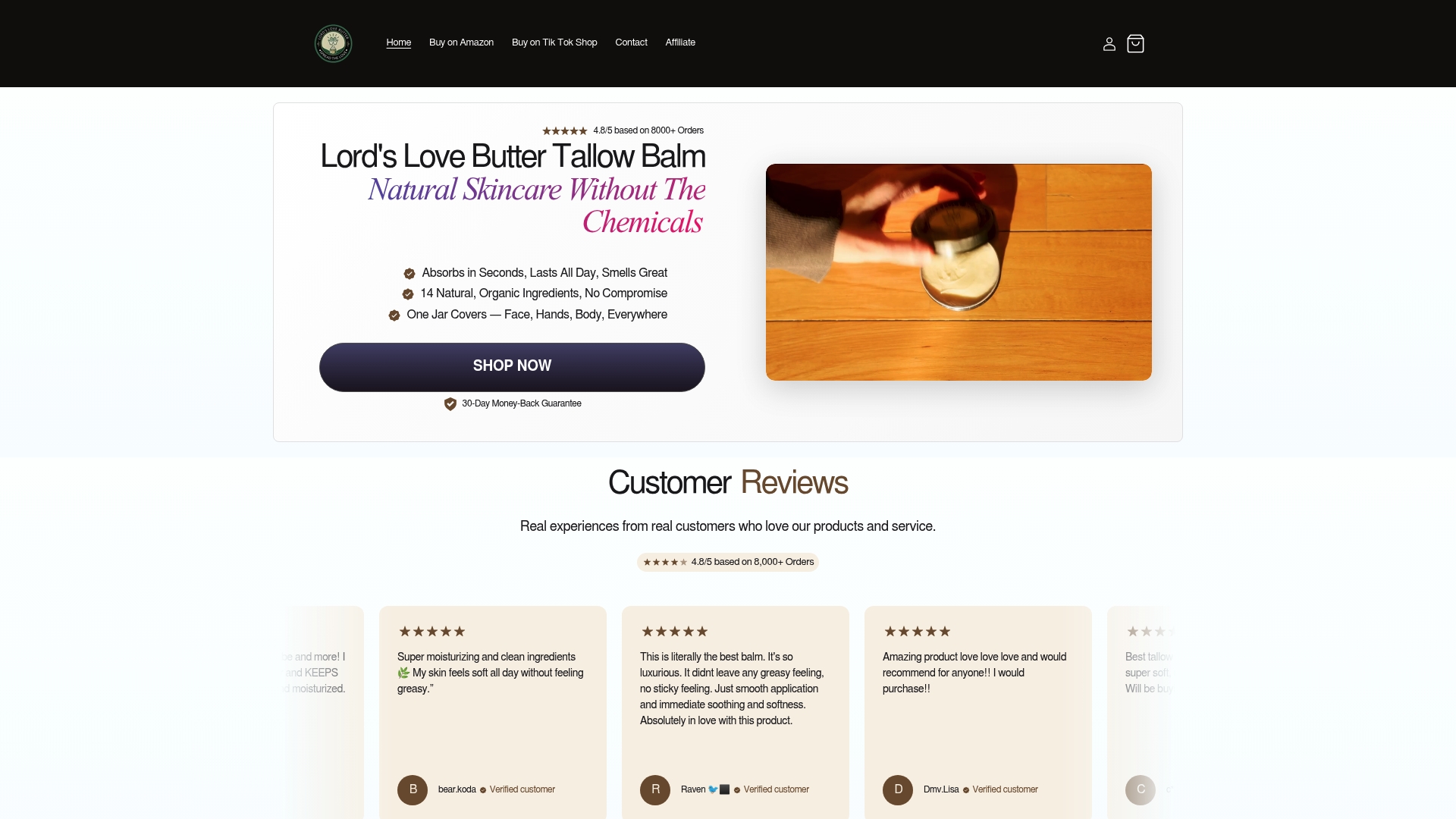
For daily home use, the 2.4 oz jar covers whole-body application with room to spare. If you’re moving between the nursery, the diaper bag, and the car, the 2.4 oz tin is built for that, and the tin and jar bundle covers both without buying twice. Dealing with heavier body dryness on elbows or heels calls for the standard balm’s fuller occlusive layer, while frequent daytime face application fits better with the lighter Tallow Balm Lite. Spending time outside with the baby? The mint lip and mineral sun stick pair adds zinc oxide sun protection alongside lip relief, and the three-texture layering kit rounds out tin, lip, and sun stick in one order.
Some orders may include a 30-day money-back guarantee, making trying a new step in your routine less of a commitment. Browse the full collection and pick the format that matches how your week actually runs.
This article is general information, not a substitute for advice from a qualified doctor. Consult a qualified healthcare professional about your own circumstances before acting on anything here.
Sources
- What Experts Want You to Know About Dry Skin After Baby — Parents
- Managing postpregnancy hormonal skin issues in breastfeeding women — Dermatology Times
- Postpartum thyroiditis (NCBI Bookshelf)
- Contact dermatitis — National Eczema Association
FAQ
How Long Does Postpartum Skin Dryness Last?
Dryness typically peaks around two months after delivery and eases gradually as hormones stabilize over the following months. If it’s still severe past four months, or accompanied by fatigue and weight changes, ask your doctor about postpartum thyroiditis, which affects a share of women.
What Is the 3-3-3 Rule for Postpartum?
The 3-3-3 rule generally refers to postpartum recovery pacing (roughly three days, three weeks, and three months as recovery milestones) rather than a skincare framework specifically. Definitions vary across sources, so treat it as a general recovery guideline rather than a fixed skincare schedule.
What Does Postpartum Dermatitis Look Like?
It usually shows up as red, itchy, cracked, or scaly patches, most often on the hands or around the nipples from frequent washing and nursing. Persistent cases can point to contact dermatitis or eczema and may need a dermatologist’s input if barrier-repair moisturizing doesn’t resolve it within a few weeks.
What Is the Best Moisturizer for Postpartum Skin?
The best approach isn’t one product. It’s layering a humectant, an emollient, and an occlusive, applied to damp skin right after cleansing. For the final occlusive step, options like Lord’s Love Butter’s whipped tallow balm are formulated for whole-body use on sensitive, barrier-compromised skin, with current pricing listed on the product collection.