

Smear Face: Natural Tallow Balms for Non-Toxic Skincare
If you’re searching “smear face” in the context of natural skincare, you’ve likely landed on Lordslovebutter — a veteran-owned brand selling whipped beef tallow balms blended with Manuka honey, squalane, vitamin C, and zinc oxide. The short verdict: these balms are a strong fit for dry, flaky, or eczema-prone skin, and a poor fit for oily or acne-prone skin. They work best as a nightly occlusive mask or a targeted dry-patch treatment, not as an all-over daily moisturizer for every skin type.
Here’s what to know before you buy:
- What it is: Grass-fed beef tallow whipped with Manuka honey and supporting actives (squalane, vitamin C, or zinc oxide depending on the SKU)
- Best for: Dry, very dry, sensitive, eczema/psoriasis patches (with clinician approval)
- Avoid if: You have oily, acne-prone, or rosacea-reactive skin
- Typical use: Pea-size amount at night, pressed (not rubbed) onto clean skin
- Price range: Artisan-tier pricing above drugstore moisturizers, reflecting small-batch sourcing
- Shipping note: Tallow balms can soften or partially melt in transit during warm months — this is cosmetic, not a safety issue, but worth knowing before checkout
Pro Tip: Before applying any tallow balm to your full face, patch test on the inside of your wrist or behind your ear for 48 hours. Tallow is occlusive and can trigger breakouts or contact dermatitis in reactive skin, even when the formula is chemical-free.
Key Takeaways
Lordslovebutter tallow balms are a well-sourced, commercially produced option for dry and sensitive skin — and a clear skip for oily or acne-prone skin types.
| Point | Details |
|---|---|
| Best skin types | Dry, very dry, eczema/psoriasis patches benefit most; oily and acne-prone skin should avoid. |
| Strongest ingredient evidence | Manuka/kanuka honey has the most clinical support; tallow itself functions as an occlusive, not a treatment. |
| Patch test first | Apply to wrist or behind ear for 48 hours before full-face use to catch contact reactions early. |
| Shipping heat risk | Balms can soften in transit — refrigerate on arrival; safety and efficacy are unaffected. |
| Lordslovebutter pick | The Whipped 2.4 oz Tin suits nightly dry-skin use; the Lite Balm or Vitamin C version suits daily or brightening needs. |
Table of Contents
- What does “Smear” mean in natural skincare?
- How does beef tallow actually work on your skin?
- Who benefits from tallow balms — and who should be cautious?
- Which Lordslovebutter format is right for your face?
- How to apply a tallow face balm safely and effectively
- What do dermatologists say — and what does the science actually show?
- What to expect when buying: price, shipping, and returns
- How to verify credibility before you buy
- Evidence snapshot: manuka and kanuka honey in topical skincare
- A note from Lordslovebutter on what this product is for
- Lordslovebutter product picks for your skin’s needs
- Sources
What does “Smear” mean in natural skincare?
When people search “smear face” alongside natural skincare terms, they’re usually looking for one of two things: the act of applying a rich balm to the face, or the Lordslovebutter product line that uses that tactile, honest language to describe its tallow-based skincare. Both lead to the same place.
Lordslovebutter is a veteran-owned, direct-to-consumer brand built around a single core premise: grass-fed beef tallow, rendered clean and whipped with Manuka honey, is a more biocompatible moisturizer than most synthetic alternatives. No parabens, no synthetic fragrance, no petroleum derivatives.
The current product lineup includes:
- Vitamin C Whipped Beef Tallow Balm with Manuka Honey & Squalane — the brightening, antioxidant-forward option
- Original Beef Tallow Balm Lite with Manuka Honey — a lighter daily-use version with a thinner finish
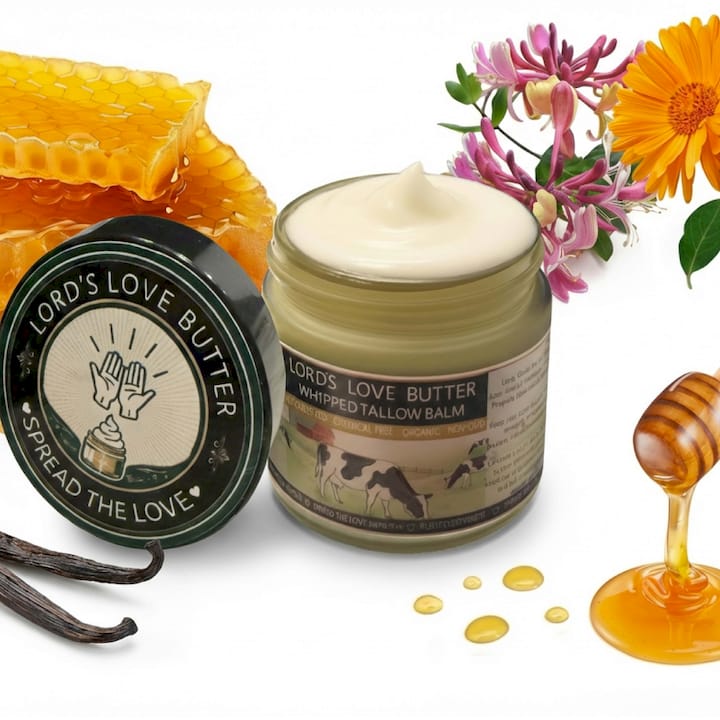
- Whipped Beef Tallow Balm with Manuka Honey, 2.4 oz Tin — the core SKU, full-texture, for nightly masking or whole-body use
- Beef Tallow Sun Balm Stick with Zinc Oxide — Daily Mineral Shield — a daytime stick that pairs tallow occlusion with mineral UV protection
All products are sold direct-to-consumer through Lordslovebutter. Jar sizes run from travel-friendly to the 2.4 oz tin. Pricing sits above drugstore moisturizers and below luxury skincare, consistent with small-batch, grass-fed sourcing.
How does beef tallow actually work on your skin?
Tallow’s appeal comes down to its fatty acid profile. It contains palmitic, stearic, and oleic acids — the same building blocks found in human sebum — plus trace fat-soluble vitamins A, D, E, and K. That structural similarity is why tallow mimics skin sebum more closely than most plant oils do.
Three terms clarify how it functions:
- Occlusive: Creates a physical barrier on the skin surface that slows water loss. Tallow is primarily this.
- Emollient: Fills gaps between skin cells, softening and smoothing texture. Tallow does this too, via its fatty acids.
- Humectant: Draws water from the environment or deeper skin layers into the upper layers. Tallow is not a humectant — that’s where Manuka honey and squalane come in.
Manuka honey is the most clinically interesting supporting ingredient in this category. It has documented antimicrobial and wound-healing properties, and topical medical-grade kanuka honey showed improvement in rosacea symptoms in a randomized controlled trial after eight weeks. Squalane (typically derived from sugarcane or olives in modern formulations) is a lightweight emollient that reduces the heavy feel of straight tallow. Vitamin C adds antioxidant activity and supports collagen synthesis. Zinc oxide in the sun stick provides broad-spectrum mineral UV protection without chemical filters.
Statistic callout: In an eight-week controlled study of a manuka honey, royal jelly, and bee venom face serum, most skin parameters showed statistically significant self-reported improvement by Week 8, though objective dermatologist grading varied across endpoints — a meaningful distinction for anyone weighing clinical claims.
Formulation differences matter more than people expect. The whipped tin has the richest, most occlusive texture. The Lite balm is thinner and absorbs faster. The stick format is the most travel-friendly and the easiest to apply without contaminating the product with fingers.
Who benefits from tallow balms — and who should be cautious?
Skin type is the single biggest factor in whether a tallow balm will work for you or against you.
Most likely to benefit:
- Dry and very dry skin, especially in cold or low-humidity climates
- Flaky, tight, or compromised skin barriers
- Eczema or psoriasis patches (with a clinician’s sign-off — tallow is not a treatment, it’s a moisturizer)
- People reacting to synthetic preservatives, fragrances, or petroleum-based occlusives
- Parents looking for a natural option for children’s dry skin without long ingredient lists
At higher risk — proceed carefully or avoid:
- Oily and acne-prone skin: tallow is comedogenic for some people, and dermatologists warn it can cause breakouts and irritation in acne-prone or reactive skin
- Rosacea: the occlusive layer can trap heat and worsen flushing in some cases
- Sensitive or reactive skin with a history of allergic contact dermatitis: Manuka honey and bee-derived ingredients are potential allergens
- Anyone currently using prescription topicals (retinoids, antibiotics) without checking with their prescriber first
Early signs of intolerance to watch for: new closed comedones (small bumps under the skin), increased redness within 24–48 hours of application, or itching that wasn’t present before. Any of these means stop and reassess.
Pro Tip: If you’re new to tallow balms, start with a thin layer over damp skin — apply a water-based hyaluronic acid serum first, let it absorb for 60 seconds, then press a rice-grain amount of balm on top. The humectant layer underneath does the water-drawing work; the tallow seals it in without needing to go on as thick.
Which Lordslovebutter format is right for your face?
The four SKUs serve genuinely different needs, and picking the wrong one is the most common reason a tallow balm underperforms.
- Vitamin C Whipped Beef Tallow Balm with Manuka Honey & Squalane — best for dull, uneven skin tone or anyone who wants antioxidant support alongside barrier repair. The squalane lightens the texture so it doesn’t feel as heavy as straight tallow. Good for evening use or as a weekend skin-reset treatment.
- Original Beef Tallow Balm Lite with Manuka Honey — the daily-use option. Thinner finish, faster absorption, less occlusion. If you’ve been nervous about tallow feeling greasy, start here.
- Whipped Beef Tallow Balm, 2.4 oz Tin — the workhorse. Full texture, maximum occlusion, best value per ounce. Use it as a nightly mask on very dry or compromised skin, or apply to elbows, heels, and hands alongside the face.
- Beef Tallow Sun Balm Stick with Zinc Oxide — the only daytime option in the lineup. Zinc oxide provides mineral broad-spectrum protection; the tallow base keeps the formula from drying out skin the way some mineral sunscreens do. Stick format means no finger-dipping and easy reapplication.
| Format | Texture | Travel-friendly | Best routine slot |
|---|---|---|---|
| Vitamin C Whipped Balm | Medium-rich, whipped | Moderate (jar) | Evening, or weekend AM |
| Original Lite Balm | Light, thin finish | Moderate (jar) | Daily AM or PM |
| Whipped 2.4 oz Tin | Rich, full occlusive | Less (larger tin) | Nightly mask |
| Sun Balm Stick | Firm, glides on | High (stick format) | Daily AM, reapply midday |
Pro Tip: Jar hygiene matters with preservative-free balms. Use a clean spatula or freshly washed fingers every time — double-dipping with dirty hands is the fastest way to introduce bacteria into a product that has no synthetic preservative system to fight it off.
How to apply a tallow face balm safely and effectively
The best time to use a full-texture tallow balm on your face is at night, after cleansing. For the Lite balm or Vitamin C version, a thin morning layer under makeup works too — tallow functions well as a natural primer base when applied sparingly.
- Cleanse your face thoroughly and pat dry, leaving skin slightly damp.
- Apply any water-based serum (hyaluronic acid, niacinamide) and let it absorb for 60 seconds.
- Warm a pea-size amount of balm between your fingertips for 5–10 seconds until it softens.
- Press, don’t rub. Press the balm onto cheeks, forehead, and chin using gentle palm pressure. Rubbing creates friction and can pill the product.
- Avoid active breakout zones and the eyelid mucosa (the inner rim of the eyelid). The orbital bone is fine; the mucosa is not.
- Leave it overnight or for at least 20 minutes before applying anything else.
Layering with actives: Tallow is compatible with most serums when applied on top as the final step. If you use a retinoid or AHA/BHA, apply those first on clean skin, wait 20 minutes for them to absorb, then apply the balm as a buffer layer. This reduces the irritation risk from actives without neutralizing them. Do not mix tallow directly with a vitamin C serum if you’re also using the Vitamin C Whipped Balm — that’s redundant and can oversaturate the skin.
Pro Tip: To reduce pore-clog risk during your first two weeks, mix a small amount of the balm with a non-comedogenic oil like squalane before applying. This cuts the occlusion level while your skin adjusts, and you can phase out the dilution once you confirm your skin tolerates the full formula.
What do dermatologists say — and what does the science actually show?
The honest answer: dermatologists generally view tallow as a functional occlusive moisturizer, not a treatment. Experts note that tallow’s popularity has outpaced the clinical evidence supporting its more ambitious claims — it won’t replace retinoids for anti-aging or niacinamide for barrier repair.
Primary safety concerns dermatologists raise:
- Comedogenicity: Tallow can clog pores, particularly in oily or acne-prone skin
- Irritation in rosacea: Occlusive layers can trap heat and worsen flushing
- Allergic contact dermatitis: Possible with bee-derived ingredients (honey, royal jelly, bee venom)
- Contamination risk in artisanal products: Clinicians warn that raw or homemade tallow can carry contamination and stability risks — commercial products tested for safety are a meaningfully safer option
The strongest ingredient-level evidence in this category belongs to Manuka and kanuka honey, not tallow itself. A randomized trial of topical 90% medical-grade kanuka honey showed improvement in rosacea symptoms in a subset of participants after eight weeks. That’s a specific formulation at a high concentration — not a blanket endorsement of any product containing a small percentage of honey.
Lordslovebutter addresses the contamination concern through grass-fed sourcing and a commercial manufacturing process, which is a meaningful distinction from homemade or raw tallow. The brand’s ingredient transparency (full INCI-style disclosure) and its veteran-owned, small-batch positioning signal a level of care that many artisan tallow makers skip. For anyone weighing natural approaches to soothe skin irritation, the combination of a commercially produced tallow base with clinically studied honey is a more defensible choice than raw tallow alone.
What to expect when buying: price, shipping, and returns
Lordslovebutter products are priced above mass-market drugstore moisturizers, reflecting grass-fed sourcing, small-batch production, and a short, clean ingredient list (exact prices not detailed). Think of it as artisan-tier pricing — comparable to specialty natural skincare brands, not department store luxury.
Key purchasing notes:
- Heat and melt advisory: Whipped tallow balms can soften significantly in transit during warm months. This doesn’t affect safety or efficacy — the product re-solidifies when cooled. If your tin arrives soft, refrigerate it for 30 minutes before opening.
- Jar vs. stick: The stick format ships and stores more reliably in heat. If you’re ordering in summer, the Sun Balm Stick is the most heat-stable option.
- Bundles vs. single jars: Single jars let you test a format before committing. Bundles offer better per-ounce value if you already know the formula works for your skin.
- Where to buy: Direct from Lordslovebutter only — this is a DTC brand, so ordering through the official site is the only way to verify authenticity and access current batch information.
- Delivery: Standard domestic US shipping timelines apply; check the site for current estimates and any seasonal heat-packaging upgrades.
How to verify credibility before you buy
Trust signals worth checking on any tallow balm product page — and what Lordslovebutter offers against each:
- Ingredient sourcing disclosure: Grass-fed, chemical-free tallow is stated explicitly on product pages. That’s a meaningful claim because rendering quality affects the fatty acid profile and contamination risk.
- Full ingredient transparency: Look for a complete ingredient list, not just hero-ingredient marketing. Lordslovebutter lists its full formula.
- Veteran-owned brand provenance: Stated on the brand’s site — a trust signal that speaks to accountability and personal investment in the product.
- Shipping and returns policy: Clearly posted, including the heat/melt advisory. A brand that discloses this proactively is telling you they’ve thought about the supply chain.
- Customer testimonials: Before-and-after accounts from real customers describe improved skin texture within days of consistent use. Prioritize testimonials that mention specific skin conditions (eczema, dryness) over generic “my skin looks great” claims — condition-specific results are more informative.
- Third-party testing: Where available, look for batch testing documentation or certificates of analysis. If not publicly posted, contact the brand directly.
This type of condition-specific testimonial — naming the skin issue, the timeline, and the specific change — carries more weight than a vague endorsement. Look for that pattern when reading reviews.
Evidence snapshot: manuka and kanuka honey in topical skincare
The clinical case for honey-based topicals is the strongest ingredient-level support available in this product category. Two trials stand out:
| Trial | Design | Duration | Key finding |
|---|---|---|---|
| Kanuka honey RCT (BMJ Open) | Randomized controlled trial, topical 90% kanuka honey | 8 weeks | Improvement in rosacea symptoms in a subset of participants |
| Manuka honey serum study (PMC) | Controlled study, 40 women, daily use | 8 weeks | Most self-reported skin parameters improved significantly by Week 8; dermatologist grading mixed |
Statistic callout: The manuka honey serum study enrolled 40 women over eight weeks, with self-reported improvements appearing as early as Week 2 — but objective dermatologist grading varied, which is the standard limitation of small, single-formulation trials.
Applicability limits to keep in mind:
- Both trials used specific formulations at high concentrations — results don’t automatically transfer to products with lower honey percentages
- The kanuka honey trial was a single-brand formulation; clinical trial evidence for medical-grade honey is the strongest available but still formulation-dependent
- Small sample sizes mean these are promising signals, not definitive proof
- Bee venom and royal jelly, sometimes paired with honey in serums, have limited independent trial data at this point
For regenerative skincare ingredients like bee venom and manuka honey, the science is directionally positive but still maturing. The honest framing: honey is the most evidence-backed ingredient in this category; tallow is the carrier that makes the formula occlusive.
A note from Lordslovebutter on what this product is for
Lordslovebutter was designed for people who’ve run out of patience with synthetic ingredient lists and want something closer to what skin actually recognizes. Every batch uses grass-fed, chemical-free beef tallow — sourced for quality, not just cost — whipped with Manuka honey and a short list of actives chosen because they have a reason to be there. As a veteran-owned business, the brand brings the same standard of care to sourcing and formulation that it applies to everything else: no shortcuts, no filler ingredients, no vague “proprietary blend” language.
Lordslovebutter product picks for your skin’s needs
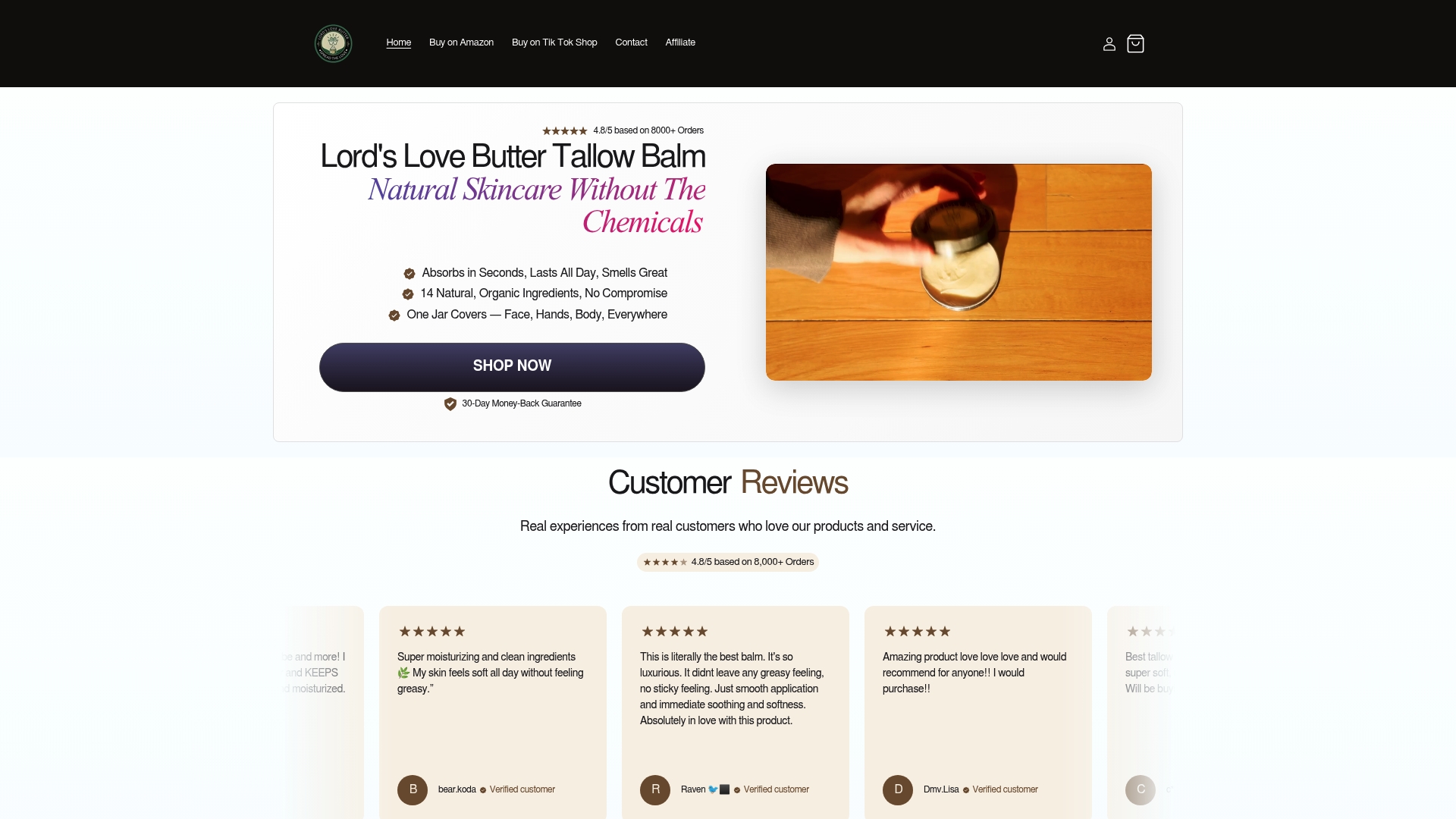
For dry skin that needs a nightly reset, the Whipped Beef Tallow Balm with Manuka Honey, 2.4 oz Tin is the core recommendation. Full occlusion, maximum hydration, and enough product to use on face and body without rationing.
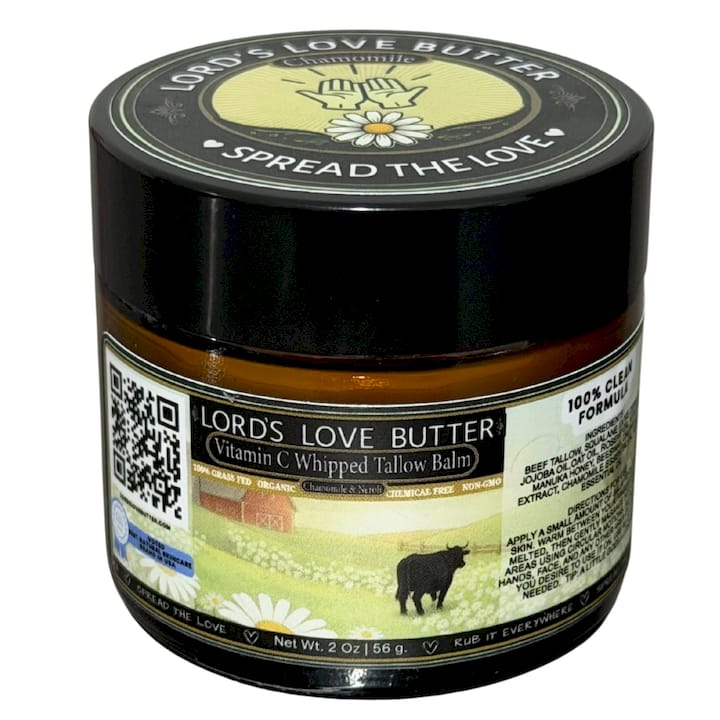
If you want antioxidant support alongside barrier repair, the Vitamin C Whipped Beef Tallow Balm with Manuka Honey & Squalane adds brightening and collagen-support activity to the same tallow base. The squalane also makes it lighter than the standard tin.
For daily use without the heavier feel, the Original Beef Tallow Balm Lite is the starting point — thinner finish, faster absorption, still Manuka honey-based.
And for daytime mineral sun protection that doesn’t strip moisture, the Beef Tallow Sun Balm Stick with Zinc Oxide is the only tallow-based SPF option in the lineup. Order direct at lordslovebutter.com, and if you’re buying in warm months, refrigerate on arrival if the balm has softened in transit.
Sources
- Is Beef Tallow Good for Your Skin?
- Topical medical‑grade kanuka honey randomized trial (BMJ Open)
- Investigating the Effects of a Manuka Honey, Royal Jelly, and Bee Venom‑Derived Face Serum on Skin Health and Signs of Aging - PMC
- Beef tallow as skin care? Experts explain what’s truth—and myth | National Geographic
- Dermatologists share their verdict on beef tallow in skincare - ABC News
This article is general information, not a substitute for advice from a qualified doctor. Consult a qualified healthcare professional about your own circumstances before acting on anything here.
Recommended
- How to Apply Whipped Tallow Without Greasy Residue – Lord’s Love Butter
- Best Hearthandhomesteadstore.com Alternatives for Tallow Skin Care – Lord’s Love Butter
- Replace Synthetic Lotion with Natural Balm: A Smart Switch – Lord’s Love Butter
- How Tallow Restores Skin Texture: a Natural Guide – Lord’s Love Butter

