
Moisturize within about three minutes of getting out of the shower or bath, a habit dermatologists call soak-and-seal, and keep applying multiple times daily for routine maintenance. During a flare, reapply regularly or whenever skin starts to feel tight or dry. The best format is the occlusive, minimal-ingredient one you will actually reach for at 11 PM when you are tired.
TL;DR:
- Applying moisturizer within three minutes of showering or bathing helps trap water in the skin and prevents quick evaporation.
- During flares, reapply every few hours, especially after handwashing or when skin feels tight, to maintain hydration and prevent irritation.
- Ointments provide the longest-lasting protection, often only needing application once or twice daily, while lotions typically require more frequent reapplication.
- Layering prescribed medication with moisturizer requires following specific sequencing instructions, usually applying medication first on dry effects followed by moisturizer.
- Using minimal-ingredient, occlusive balms like whipped beef tallow can support skin barrier repair and improve texture, especially when integrated into a consistent soak-and-seal routine.
Table of Contents
- Key moments when moisturizing matters most
- Ointments, creams, and lotions change how often you reapply
- How to soak, seal, and safely moisturize eczema-prone skin
- Layering moisturizer with prescribed eczema medication
- Why product choice matters as much as timing
- What actually keeps a moisturizing routine going
- A moisturizing balm built for the soak-and-seal window
- Where this guidance comes from
- Sources
- FAQ
Key moments when moisturizing matters most
Timing changes how well a moisturizer works. Right after a shower or bath, skin has absorbed water it will lose fast unless something seals it in. The National Eczema Association recommends applying moisturizer within minutes of bathing, while skin is still damp, so that water gets trapped rather than evaporating. This soak-and-seal approach is one of the simplest timing rules in eczema care.
Outside of bathing, consistency matters more than any single moment. The American Academy of Dermatology recommends moisturizing multiple times daily as baseline maintenance, since regular application helps prevent the cracking and dryness that trigger flares in the first place.
During an active flare, the rules shift. Skin loses water faster and needs more frequent protection.
- Reapply after every handwash, since soap strips natural oils even when hands look fine.
- Moisturize at the first sign of itching or tightness rather than waiting for visible flaking.
- During intense flares, apply regularly, adjusting to how the skin feels rather than the clock.
Prompt moisturizing after these moments slows evaporative water loss through the skin barrier, and an intact barrier is harder for irritants and bacteria to get through.
Ointments, creams, and lotions change how often you reapply
Product format decides how long protection lasts, which in turn decides your reapplication schedule. Ointments are the thickest and most occlusive, so they hold moisture longest, often letting you go several hours between applications or simply apply once at bedtime and skip a midday round. Creams sit in the middle: a solid twice-daily habit covers maintenance, but flares usually call for reapplication every few hours.
- Ointments: heaviest, most occlusive, typically applied every several hours or once at night.
- Creams: balanced texture and occlusion, twice daily for maintenance and every few hours during flares.
- Lotions: lightest and fastest absorbing, often needing more frequent reapplication, and generally a better fit for weeping or hairy areas where a heavy ointment feels uncomfortable.
Reapplying every few hours during a flare is a common recommendation for many creams, while ointments may last longer between applications because of their heavier occlusive layer. That gap matters when you are deciding what to keep on the nightstand versus in a bag for work.
Face skin usually tolerates lighter creams or lotions better than body-strength ointments, and cold, dry weather typically pushes everyone toward heavier formats and more frequent use than summer humidity does. None of this matters much if the product sits in a drawer. Cleveland Clinic guidance notes that comfort and tolerability drive long-term use more reliably than any formulation’s theoretical advantage, so the “best” product is the one that actually gets applied.

How to soak, seal, and safely moisturize eczema-prone skin
A short, lukewarm shower or bath, not a hot one, is the starting point. Hot water strips oils and can worsen dryness, while lukewarm water cleanses without adding to the problem.
- Keep the shower or bath brief and lukewarm, then pat skin dry with a towel instead of rubbing, leaving it slightly damp rather than bone dry.
- Apply any prescribed topical medication to affected areas as your clinician directed.
- Within about three minutes, apply moisturizer to the rest of the skin, sealing in the water the skin just absorbed, a routine detailed in this step-by-step shower guide.
- For intense flares, ask your clinician about wet-wrap therapy: damp layers of clothing or bandages placed over moisturizer or medication, usually applied in the evening and done only under clinician instruction.
- Let heavier ointments absorb for a few minutes before dressing or getting into bed to avoid slipping on tile or staining sheets.
Pro Tip: Keep a towel over your pillow on heavy ointment nights. It saves the sheets and keeps you from waking up sliding around.
Layering moisturizer with prescribed eczema medication
Order matters when you are using a prescribed topical treatment alongside a moisturizer. Guidance summarized in 2023 AAAAI and ACAAI practice-parameter recommendations finds that combining topical anti-inflammatory medication with regular moisturizer use works better than medication alone, but the sequence and spacing should follow your prescriber’s instructions.
- Apply prescribed medication to nearly dry, affected skin first, then moisturize the surrounding unaffected skin, unless your clinician gives you a different order.
- If your provider specifies a wait time between medication and moisturizer, or asks you to avoid layering moisturizer directly over active treatment areas, follow that instruction exactly.
- Treat moisturizer as a complement to prescribed care, not a substitute for it. Skipping medication in favor of moisturizer alone undertreats an active flare.
- When your regimen feels unclear, call your dermatologist or allergist rather than guessing. This guide to layering skincare products covers common sequencing questions, but a personalized plan from your own clinician always takes priority.
Why product choice matters as much as timing
Getting the timing right only helps if the product you are using actually stays on the skin and gets reapplied without a fight. Michael, who writes on skin barrier care for Lord’s Love Butter, focuses on how grass-fed whipped beef tallow performs as an occlusive barrier support, since tallow’s fatty acid profile is structurally close to the lipids already found in human skin.
A minimal-ingredient, occlusive balm fits naturally into the soak-and-seal window and into a bedtime occlusion routine, since it needs no fragrance-masking additives and leaves a protective layer similar to what a plain ointment provides. Users have reported improvements in skin texture and irritation with consistent use.
Improved texture and reduced irritation within days of regular application.
These are individual, self-reported experiences rather than findings from a clinical trial, and they do not replace a dermatologist’s evaluation of a specific case of eczema.
What actually keeps a moisturizing routine going

Perfect timing rarely survives a rushed morning, a toddler mid-diaper-change, or a workday with no private place to reapply. A tin small enough for a bag or desk drawer solves more adherence problems than any ingredient list does. Keep one by the shower for the three-minute window and a second, lighter one for midday touch-ups.
Weather changes the math too: hot, humid months often need less product and lighter textures, while cold, dry air usually calls for heavier layers and more frequent reapplication. Patch-test any new balm on a small area for a few days before committing, and accept that the greasier options that work best overnight are rarely the ones you will want under a work shirt at noon.
— Michael
A moisturizing balm built for the soak-and-seal window
There are whipped beef tallow balms designed for the routine described above: apply within minutes of stepping out of the shower, or smooth on before bed for overnight occlusion. Such balms are often formulated without synthetic fragrance or filler chemicals, which matters for skin that is already reacting to too much.
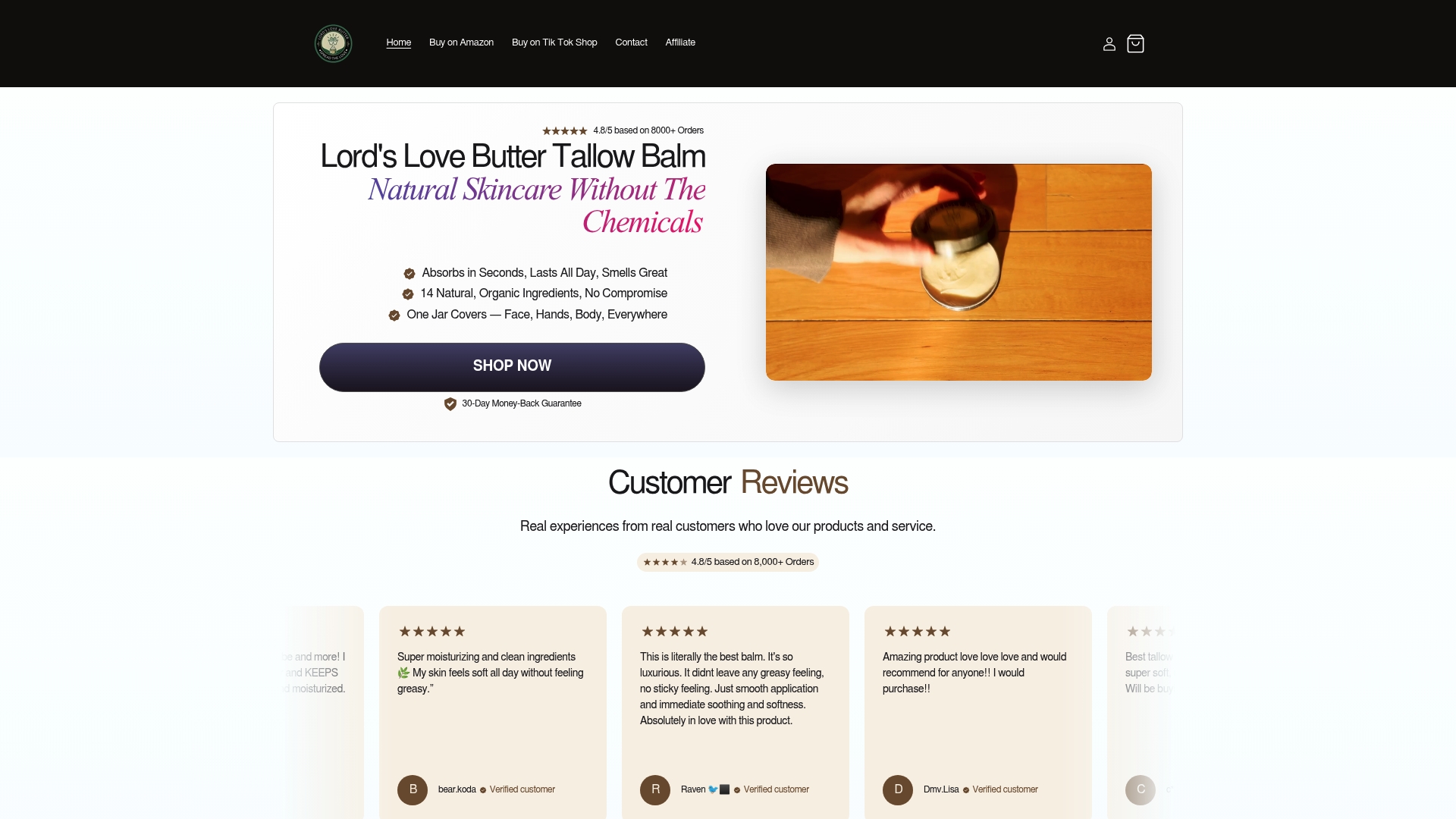
- The Whipped Beef Tallow Balm with Manuka Honey & Propolis collection includes jar and travel tin sizes for keeping one by the shower and one in a bag.
- The 2.4 oz Travel Tin fits a purse or gym bag for the midday reapplications flares demand.
- New to the brand or to tallow-based balms in general, patch-test a small area first, the same way you would with any new moisturizer.
Lord’s Love Butter is veteran-owned and backs every order with a 30-day money-back guarantee, so trying the routine costs you nothing but the patch test. For the full shower-to-seal sequence, see the step-by-step application guide, then shop the full collection to find the size that fits your day.
Where this guidance comes from
This article draws on the American Academy of Dermatology’s maintenance guidance, a Cochrane evidence review on emollients, Cleveland Clinic’s practical timing advice, and AAAAI practice-parameter guidance on combining medication with moisturizer. For product texture comparisons, the Krém na ruky resource offers additional background. Always ask your own clinician for a plan suited to your case.
Sources
- Pick a moisturizer | American Academy of Dermatology (AAD)
- Moisturizing for Eczema | National Eczema Association
- Moisturisers improve eczema symptoms and lessen the need for corticosteroids | NIHR Evidence (Cochrane summary)
- Eczema skin care | Cleveland Clinic
- 2023 AAAAI/ACAAI practice-parameter guidance (summary)
FAQ
Is it better to moisturize eczema or let it dry out?
Moisturizing is the better approach. Cochrane evidence finds moisturizers reduce eczema severity and flare frequency compared with no moisturizer at all, and letting skin dry out tends to worsen itching and cracking.
How frequently should I moisturize my eczema?
For maintenance, the American Academy of Dermatology recommends at least twice daily. During a flare, reapply every few hours, often every 3 to 4 hours for creams, whenever skin feels dry or tight.
What is the “3 minute rule” for treating eczema?
The 3 minute rule means applying moisturizer within about three minutes of finishing a shower or bath, while skin is still damp. The National Eczema Association recommends this soak-and-seal timing to trap water in the skin before it evaporates.
What clears up eczema quickly?
There is no single fast fix, since eczema care combines prescribed anti-inflammatory medication with consistent moisturizing. Guidance summarized by AAAAI and ACAAI finds that medication plus regular moisturizer works better together than either approach alone, so consult your clinician for a personalized plan rather than expecting an overnight solution.