

How Occlusive Moisturizers Prevent Flares
Occlusive moisturizers prevent flares by forming a physical, water-resistant film over the skin that blocks transepidermal water loss (TEWL), giving the stratum corneum time to rehydrate and repair itself. Petrolatum, the benchmark occlusive ingredient, can cut TEWL by more than 98%, and that single mechanism explains most of what follows in this guide.
Three things matter most before you read further:
- The mechanism: occlusives seal the skin’s surface, trapping moisture that would otherwise evaporate into the air.
- The clinical payoff: daily moisturization has been linked to a median time to flare beyond 180 days, compared to roughly a month without it.
- The practical move: apply your occlusive to damp skin right after bathing, a technique dermatologists call soak-and-seal.
The rest of this guide walks through why that works, what the research actually shows, and how to build a routine around it without overcomplicating your skin care.
Key Takeaways
Occlusive moisturizers prevent flares by blocking transepidermal water loss long enough for the skin barrier to rehydrate and repair itself, with petrolatum setting the benchmark at over 98% TEWL reduction.
| Point | Details |
|---|---|
| Mechanism drives the outcome | Sealing the stratum corneum reduces TEWL, which gives skin time to rebuild its own lipid barrier. |
| Soak-and-seal timing matters | Apply occlusives to damp skin right after bathing to trap more surface moisture. |
| Consistency beats occasional use | Daily moisturization is linked to a median time to flare beyond 180 days versus about a month without it. |
| Petrolatum is the occlusivity benchmark | Other options like lanolin and dimethicone reduce TEWL by roughly 20 to 30%, still useful but less occlusive. |
| Watch for allergy and pore-clogging risk | Patch-test new products and choose lighter formulations for the face and skin folds. |
| Lordslovebutter offers a lighter occlusive option | Whipped tallow balms deliver barrier support in a texture designed for daily whole-body use. |
Table of Contents
- What Are Occlusive Moisturizers, and How Do They Differ From Humectants and Emollients?
- How Do Occlusives Work to Stop Transepidermal Water Loss and Prevent Flares?
- What Does the Clinical Evidence Actually Show About Moisturizers and Flare Prevention?
- How Should You Use Occlusive Moisturizers to Actually Reduce Flare-Ups?
- What Are the Risks of Occlusive Moisturizers, and When Should You See a Provider?
- Which Occlusive Ingredients and Formulations Work Best?
- Where Occlusives Fit Into a Long-Term Barrier Care Routine
- Choosing a Tallow-Based Balm as Your Occlusive Option
- Sources
What Are Occlusive Moisturizers, and How Do They Differ From Humectants and Emollients?
An occlusive moisturizer works by coating the skin in a layer that water can’t easily pass through. Think of it as plastic wrap for your skin, except it’s petrolatum, beeswax, or tallow instead of polyethylene. That barrier doesn’t add water to your skin directly. It stops the water already there from leaving.
That distinction separates occlusives from the other two categories you’ll see on ingredient labels. Humectants, like glycerin and hyaluronic acid, pull water toward the skin from the air or from deeper skin layers. Emollients, like fatty acids and cholesterol, fill in the gaps between skin cells to smooth texture without necessarily blocking moisture loss. Most well-formulated moisturizers, including whipped balms, blend all three functions into one product.
| Type | How it works | Best for flare prevention when |
|---|---|---|
| Occlusive | Forms a hydrophobic film that blocks water loss | Barrier is compromised and TEWL is high (eczema, chapped skin) |
| Humectant | Draws water into the skin’s outer layer | Humidity is adequate and you need a hydration boost |
| Emollient | Smooths and softens by filling cellular gaps | Skin is rough or flaky but not severely dehydrated |
Common occlusive ingredients include:
- Petrolatum (petroleum jelly), the most studied and most occlusive option
- Mineral oil
- Lanolin
- Dimethicone (a silicone)
- Beeswax
- Plant oils like shea butter and jojoba
- Animal-derived tallow
You’ll find these delivered as ointments (the greasiest, most occlusive vehicle), creams (a water-in-oil or oil-in-water emulsion), or whipped balms, which aerate a fat base like tallow to create an occlusive product with a lighter, more spreadable texture.
How Do Occlusives Work to Stop Transepidermal Water Loss and Prevent Flares?
Here’s the chain reaction that connects a greasy jar of balm to fewer eczema flares. It starts with a damaged skin barrier and ends with calmer, more resilient skin, and every step in between is where an occlusive earns its keep.
- The barrier breaks down. In eczema, psoriasis, and simple dry skin, the stratum corneum (the skin’s outermost layer) loses structural lipids that normally hold moisture in.
- Water loss accelerates. Without those lipids, water escapes into the air far faster than it should, a process called transepidermal water loss, or TEWL.
- Inflammation gets triggered. Dehydrated, cracked skin lets irritants and allergens penetrate more easily, which can set off the itch-scratch cycle that defines a flare.
- You apply an occlusive. The hydrophobic film sits on top of the skin, physically blocking the pathway water would otherwise take to evaporate.
- TEWL drops. With petrolatum, that drop can exceed 98% under controlled conditions. Less occlusive options like lanolin or dimethicone typically reduce TEWL by 20% to 30%.
- The barrier gets time to repair. Trapped moisture keeps the stratum corneum hydrated long enough for the skin to rebuild its own lipid structure.
- Flares become less frequent. A calmer, better-hydrated barrier is less reactive to the everyday triggers that would otherwise set off inflammation.
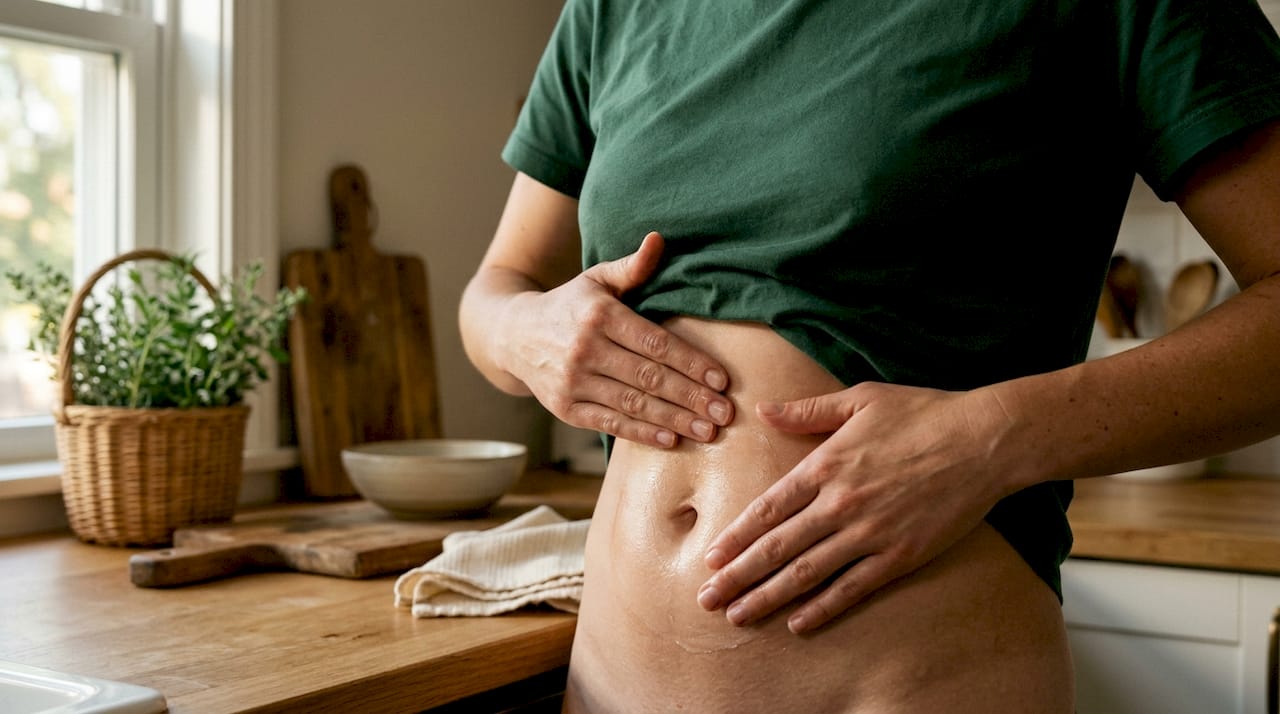
The technique that maximizes every step in that chain is called soak-and-seal: apply your occlusive moisturizer while your skin is still damp from a bath or shower, not after it has fully air-dried. Damp skin holds more surface water, and the occlusive traps that water right where it lands instead of letting it evaporate first. Clinical guidance on moisturizer use consistently backs this timing detail.
Pro Tip: Pat your skin only until it’s damp, not bone dry, then apply your balm within a couple of minutes. Waiting even five to ten minutes after a shower lets a meaningful amount of that surface moisture evaporate before your occlusive has a chance to lock it in.
What Does the Clinical Evidence Actually Show About Moisturizers and Flare Prevention?
The strongest signal in the research is straightforward: people who moisturize daily go longer between flares than people who don’t. A review of clinical trials found that regular moisturization pushed the median time to flare past 180 days, compared to somewhere around 28 to 30 days for those who skipped it. Pooled analyses in that same review found moisturized groups had flare rates reduced by a factor of roughly 3.74 compared to non-moisturized groups.
Consistent barrier support through daily moisturization is increasingly treated in dermatology as a foundational, steroid-sparing therapy, one that reduces inflammatory relapses and lessens how often topical corticosteroids are needed to control symptoms.
That steroid-sparing framing matters because it reframes moisturizer from a cosmetic afterthought into a therapeutic tool. Dermatology guidance increasingly treats daily emollient and occlusive use as first-line maintenance, not something you reach for only after a flare has already started.
None of this means every product performs identically, and the research has real limits worth naming. Trials studying nonprescription moisturizers often test twice-daily application, but formulations vary enormously between studies, which makes it hard to say any single product is “the” proven option. Adherence is also a persistent problem. Some participants in these trials stop using a moisturizer regularly because of texture, greasiness, or simple forgetfulness, and populations with severe or treatment-resistant eczema are often underrepresented. The takeaway isn’t that the evidence is weak. It’s that consistency and cosmetic acceptability matter almost as much as the ingredient list itself.
How Should You Use Occlusive Moisturizers to Actually Reduce Flare-Ups?
The simplest evidence-backed routine is this: bathe with lukewarm water, pat skin damp (not dry), and apply your occlusive within a couple of minutes, ideally twice a day. That single habit, repeated daily, is what the research behind time-to-flare data is actually measuring.
A practical daily sequence looks like this:
- Take a short, lukewarm shower or bath. Hot water strips natural oils and worsens dryness.
- Pat skin with a towel until just damp. Don’t rub, and don’t wait for skin to air-dry.
- Apply any prescribed topical medication first, if you’re using one, following your provider’s instructions.
- Layer a humectant if your skin needs extra hydration (optional for most routines).
- Seal everything in with your occlusive moisturizer, applied generously to damp skin.
- Repeat at least once more during the day, particularly on hands, elbows, or any area exposed to frequent washing.
A few dos and don’ts round out the routine:
- Don’t apply occlusives directly over open, weeping, or actively infected lesions. Get those evaluated first.
- Do patch-test any new product on a small area of forearm skin and wait 24 to 48 hours before applying it more broadly.
- Do apply prescription topical treatments before your occlusive, not after, so the medication can absorb rather than sitting on top of a sealed barrier.
- Don’t assume more product means better results. A thin, even layer is usually enough.
For infants and young children, lighter, fragrance-free balms are generally better tolerated across the whole body, and a gentle barrier balm designed for sensitive newborn skin is worth prioritizing over heavier adult-strength ointments. On the face, where pores are more prone to congestion, a lighter formulation reduces the risk of breakouts while still delivering meaningful occlusion, and applying it without leaving a greasy residue makes daily use far more sustainable.
What Are the Risks of Occlusive Moisturizers, and When Should You See a Provider?
Occlusives aren’t risk-free, and pretending otherwise does readers a disservice. The most common complaint is simply texture. Heavy ointments like straight petrolatum feel greasy and can stain clothing or bedding, which is exactly why adherence often drops off with the most occlusive products even though they’re the most effective at blocking water loss.
Contact allergy is a real, if less common, concern. Lanolin in particular has a documented history of triggering allergic contact dermatitis in a subset of users, so anyone with a known wool or lanolin sensitivity should choose a different occlusive. On the face, heavier occlusives can clog pores and contribute to breakouts in people who are acne-prone, which is why lighter balms or creams are usually recommended above the neckline. In skin folds, such as the armpits, groin, or under the breasts, trapping moisture and sweat under a thick occlusive layer can encourage itch or folliculitis rather than relieve it. Reviews examining moisturizer overuse in dermatology have flagged this exact tradeoff: occlusion helps the barrier but can also promote microbial dysbiosis when applied too heavily or too often in the wrong location.
When a product seems to be making itch worse rather than better, especially in warm, sweaty areas of the body, that’s usually a sign to switch to a lighter formulation or reduce frequency, not to abandon moisturizing altogether.
Patch testing takes the guesswork out of introducing a new product. Apply a small amount to the inner forearm, leave it uncovered, and check the area at 24 and 48 hours for redness, itching, or bumps before using it elsewhere on your body.
See a dermatologist or primary care provider if you notice spreading redness, pus, fever, a flare that doesn’t respond to your usual routine within a week or two, or any sign of infection like warmth and increasing pain around a lesion. Occlusive moisturizers support barrier repair, but they don’t treat infection, and no amount of balm will resolve a flare that has moved past simple dryness and inflammation.
Which Occlusive Ingredients and Formulations Work Best?
Not all occlusives perform the same job equally well, and the right choice depends on where you’re applying it and how sensitive your skin is.
Reading a label tells you more than the marketing copy does. “Ointment” generally signals a high-oil, low-water formulation, which usually means stronger occlusion but a heavier feel. “Cream” typically means a water-in-oil or oil-in-water emulsion, a middle ground between occlusion and everyday wearability. “Balm,” especially a whipped balm, describes a solid fat base that’s been aerated to feel lighter on skin without necessarily sacrificing much occlusive power, which is part of why whipped balm textures have become popular alternatives to traditional lotions for people who find lotions too thin and ointments too heavy.
On the natural versus synthetic question, there isn’t a clean winner. Petrolatum remains the most studied and most occlusive single ingredient, but it’s a petroleum derivative some people prefer to avoid for personal reasons. Tallow, a rendered animal fat, offers strong occlusive properties with a fatty acid profile that some people find gentler on eczema-prone skin than plant oils like coconut oil, which can be irritating for some due to its fatty acid chain length. Lanolin, despite being natural, carries a higher allergen profile than most synthetic silicones like dimethicone. The honest answer is that occlusivity and personal tolerance don’t always move in the same direction, so the “best” ingredient is the one that seals moisture effectively without triggering a reaction on your specific skin.
Where Occlusives Fit Into a Long-Term Barrier Care Routine
Occlusives aren’t a one-time fix. They’re most useful as part of a routine you stick with even when your skin looks fine, because the barrier that stays hydrated is the barrier that resists the next trigger. That’s really what the steroid-sparing research is pointing at: consistency does more heavy lifting than any single ingredient.
Lordslovebutter formulates around that idea, using grass-fed tallow as the occlusive base because it delivers meaningful barrier support without the heavy, plastic-wrap feel that keeps people from actually using an ointment every day. We’re a small, veteran-owned skin care company, and we make balms, not medical claims. If you’re managing a diagnosed condition like eczema or psoriasis that isn’t responding to routine barrier care, or if a flare comes with signs of infection, that’s a conversation for a dermatologist, not a jar of balm, however well made.
Choosing a Tallow-Based Balm as Your Occlusive Option
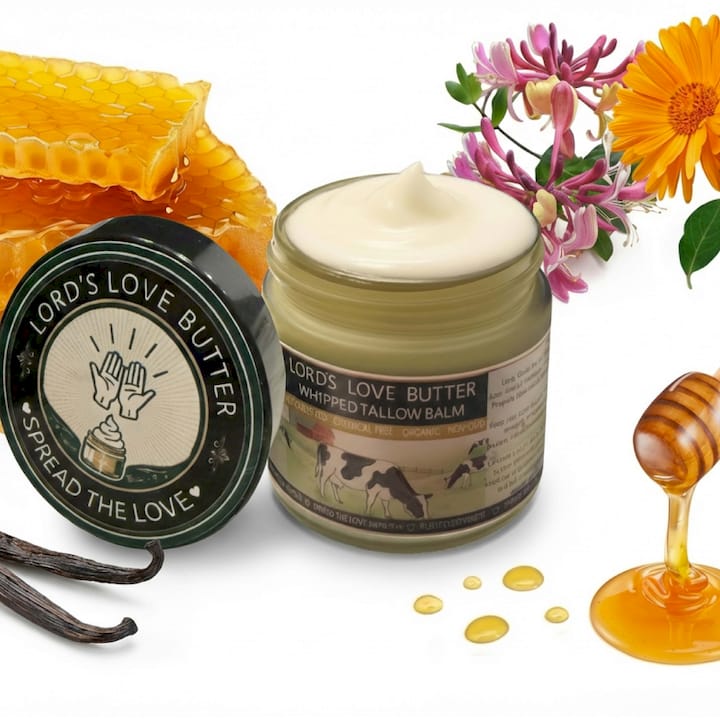
If soak-and-seal is the routine, a whipped beef tallow balm is one of the more comfortable ways to actually do it every day. Tallow behaves like a natural occlusive, similar in function to the lanolin and plant oils covered above, but whipped into a texture that spreads easily and absorbs without the tacky residue that makes people quit heavier ointments after a week.
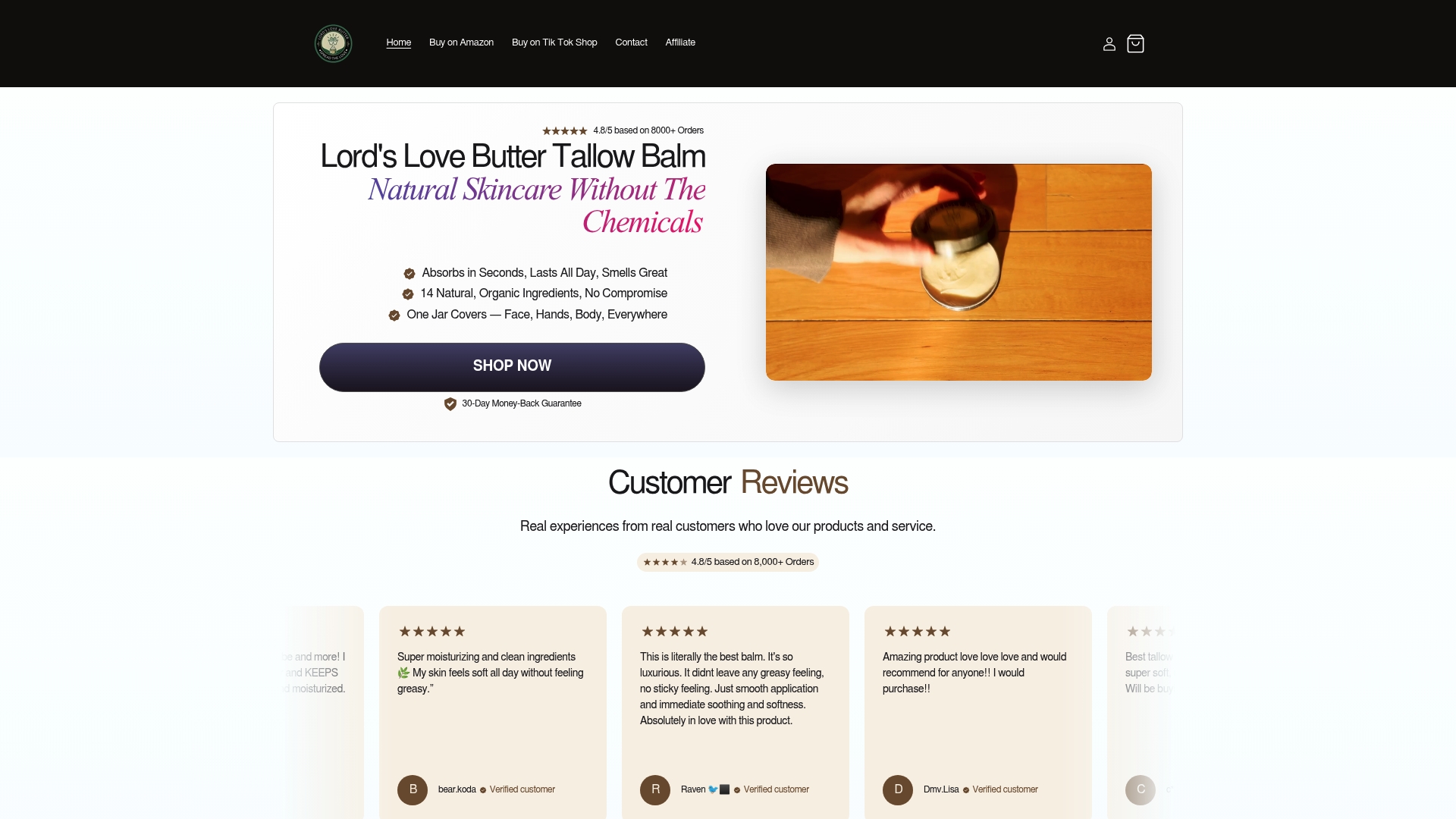
For whole-body maintenance after a shower, the Original Beef Tallow Balm Lite with Manuka Honey gives you occlusive coverage in a lighter formulation, useful if you’ve found straight petrolatum too heavy to wear under clothing. If you’re building a facial routine where antioxidant support matters alongside barrier repair, the Vitamin C Whipped Beef Tallow Balm with Manuka Honey & Squalane layers occlusion with added actives without clogging pores the way a heavier ointment might. For travel or keeping a second tin at the office so you never skip a midday application, the Whipped Beef Tallow Balm with Manuka Honey 2.4 oz Tin is sized for exactly that.
These balms are formulated to support a healthy skin barrier and are not a substitute for medical care. If you’re dealing with an active infection, a severe or spreading flare, or a diagnosed condition that isn’t responding to routine moisturizing, talk to a dermatologist before relying on any over-the-counter product. Ready to build your soak-and-seal routine around a formula that won’t sit greasy on your skin? Visit the full product page to pick the size and variant that fits your routine.
Sources
- The Role of Moisturizers in Addressing Various Kinds of Dermatitis: A Review
- Moisturizers - StatPearls - NCBI Bookshelf
- Clinical review A sticky mess—Are moisturizers overused in dermatitis care?
If you’re managing a persistent or worsening skin condition, a dermatologist or primary care provider can tailor a plan to your specific diagnosis. This article offers general, evidence-informed education, not a substitute for individualized medical advice.

