

Organic Grass-Fed Beef Tallow Balm with Raw Honey
Lordslovebutter’s Whipped Beef Tallow Balm with Manuka Honey is the clearest choice for health-conscious shoppers who want a chemical-free, whole-body moisturizer that actually repairs the skin barrier instead of just sitting on top of it. The formula combines grass-fed beef tallow, raw Manuka honey, and organic beeswax in a whipped texture that absorbs without the heavy residue most tallow products leave behind. Three variants are available right now:
- Whipped Beef Tallow Balm with Manuka Honey — Small tin size: The original, best for daily face and body use, available at the product page.
- Whipped Beef Tallow Balm with Manuka Honey — Small jar format: Same formula in a jar format for easier scooping, available at the product page.
- Vitamin C Whipped Beef Tallow Balm with Manuka Honey & Squalane: The brightening variant adds antioxidant support and squalane for a lighter feel, available at the Vitamin C balm page.
All three are formulated without synthetic preservatives or fragrances. Shipping is available across the United States, and Lordslovebutter offers a return policy for unsatisfied customers. If you have dry, sensitive, eczema-prone, or just plain neglected skin, this is where to start.
Table of Contents
- What’s actually inside an organic grass-fed beef tallow balm with raw honey?
- What does a grass-fed tallow and raw honey balm actually do for your skin?
- How to use beef tallow balm on your face and body
- Who should patch-test, and who should avoid tallow-honey balms?
- How to verify sourcing claims and store your balm properly
- Why Lordslovebutter is built differently
- What customers actually report, and when
- How to choose the right tallow-honey balm
- Key Takeaways
- Why the conventional wisdom on tallow balms misses the point
- Lordslovebutter: where to buy and what to expect
- Useful sources
What’s actually inside an organic grass-fed beef tallow balm with raw honey?
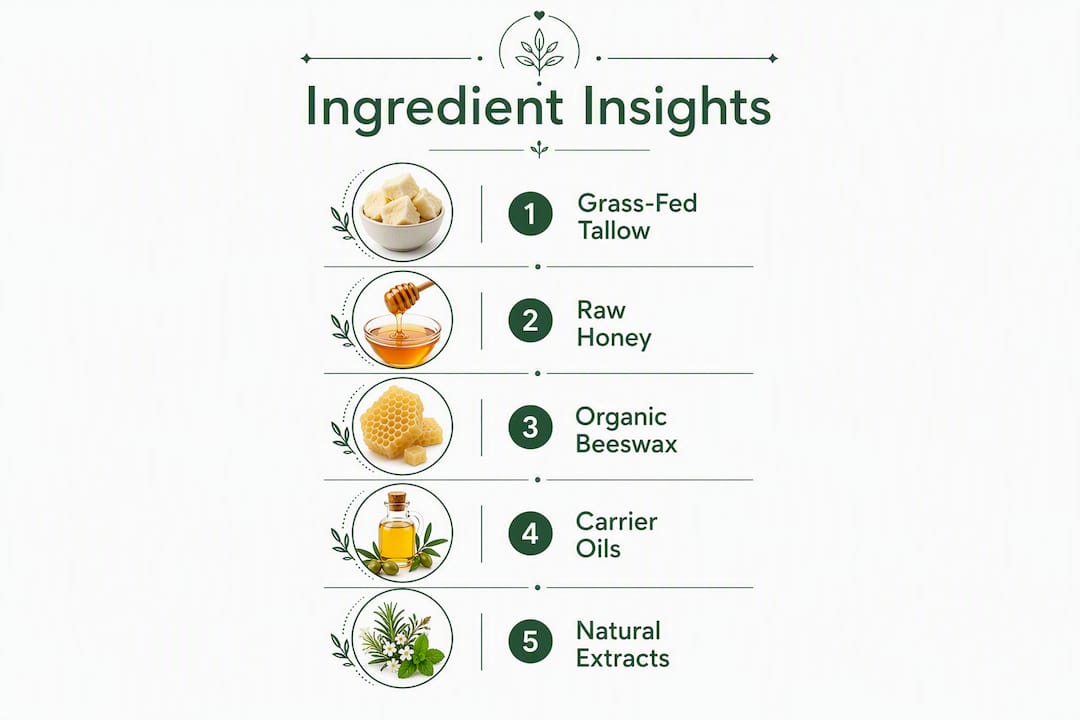
The ingredient list on a quality tallow-honey balm is short by design. Here is what you should expect to find, and what each component does:
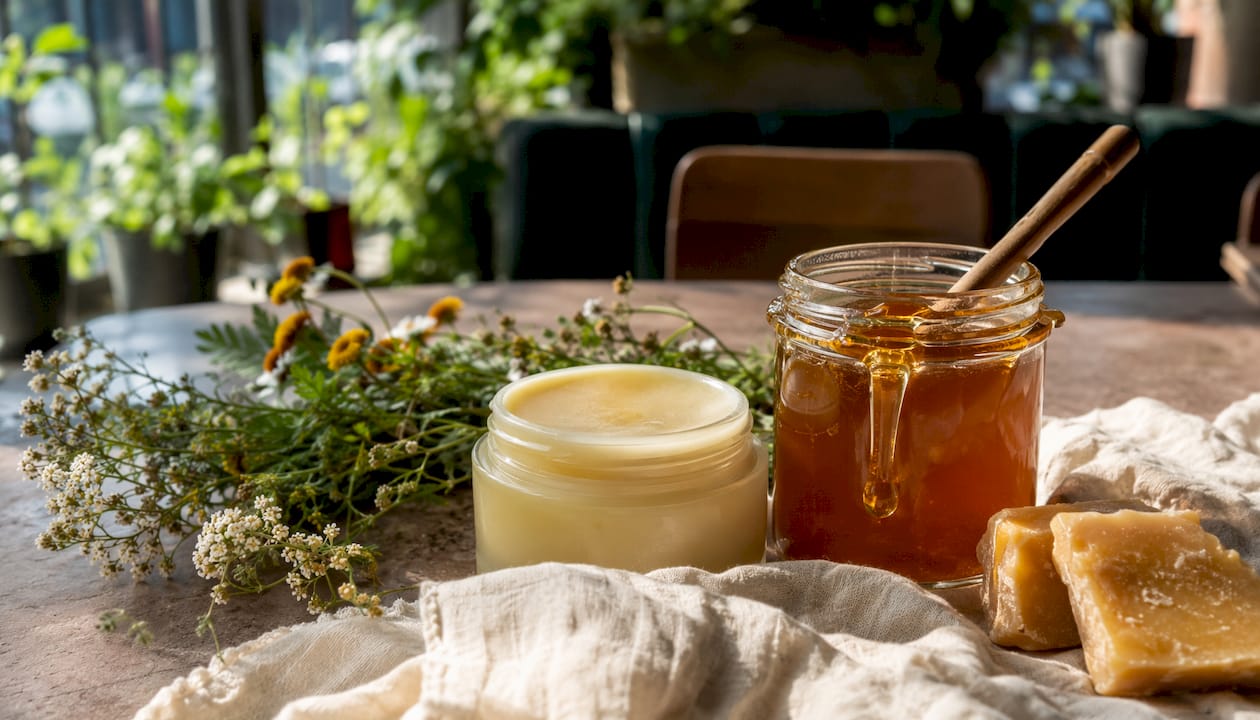
- Grass-fed beef tallow (rendered/clarified): The base. Tallow from grass-fed cattle carries fat-soluble vitamins A, D, E, and K, which support barrier repair and skin cell turnover. Its fatty-acid profile closely mirrors human sebum, which is why it absorbs so readily rather than sitting on the surface.
- Raw (unpasteurized/unfiltered) honey or Manuka honey: The humectant. Raw honey draws moisture into the skin and contributes mild antibacterial enzymes that pasteurized honey loses during processing. Manuka honey, sourced from New Zealand, is a premium option that small-batch brands cite specifically for its antibacterial properties and provenance. Unpasteurized raw honey is what separates a functional tallow-honey blend from one where honey is just a label claim.
- Organic beeswax: The occlusive layer. Beeswax seals the tallow and honey against the skin, slowing moisture evaporation without blocking pores the way petroleum-based occlusives can.
- Optional carrier oils (olive oil, squalane): These adjust texture and add fatty acids. Squalane, used in the Vitamin C variant, is lightweight and non-comedogenic. Olive oil, however, can be problematic for acne-prone skin.
- Vitamin C / actives (Vitamin C variant only): Adds antioxidant and brightening support to the base formula.
When reading any label, look for “grass-fed” or “pasture-raised” explicitly stated, “raw” or “unfiltered” next to honey, and an absence of synthetic fragrance, parabens, or PEG-based emulsifiers. Organic certification badges on the packaging are a bonus, not a guarantee of quality on their own.
Pro Tip: Scan the INCI list in order. Ingredients appear by weight, so if a carrier oil like olive oil appears in the top three positions on a product marketed for acne-prone or oily skin, reconsider. Oils listed near the bottom contribute far less to the formula.
What does a grass-fed tallow and raw honey balm actually do for your skin?
The short answer: it moisturizes deeply, repairs the barrier, and calms irritation without a long ingredient list doing the heavy lifting.
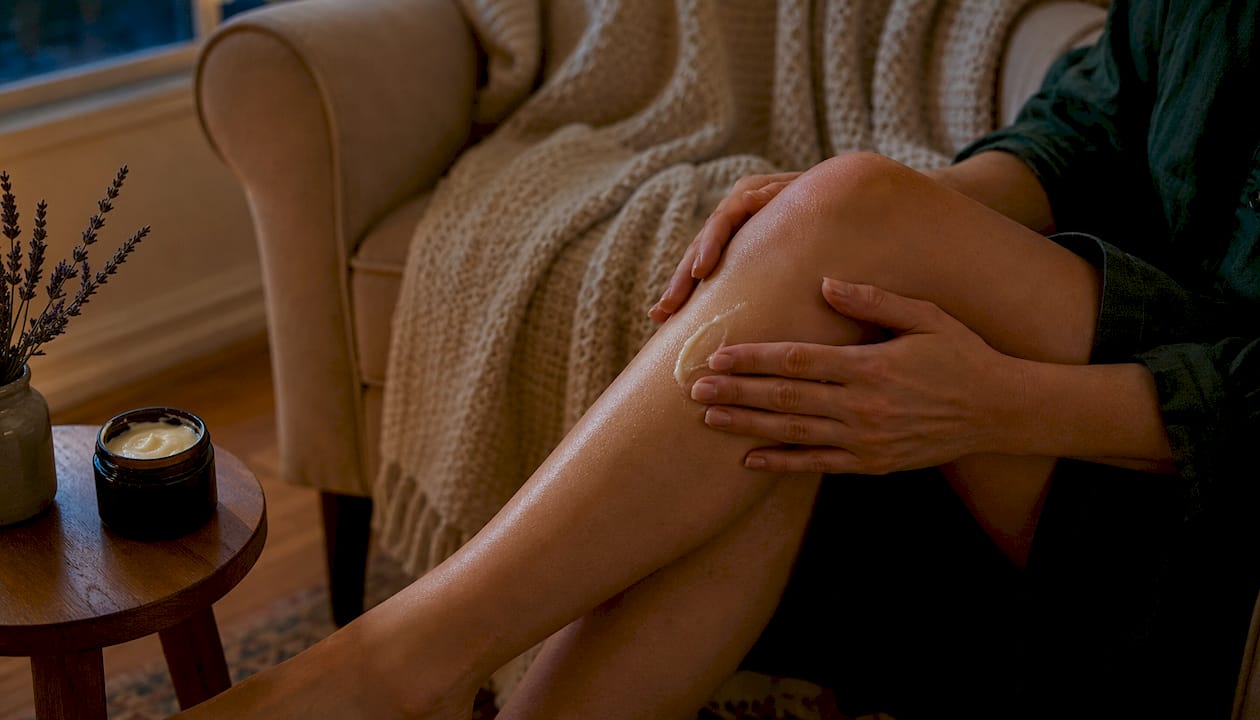
Tallow’s fatty-acid composition resembles human sebum closely enough that skin tends to absorb it without resistance. Paired with raw honey as a humectant and beeswax as an occlusive, the result is a three-layer moisture system: honey pulls water in, tallow nourishes the lipid barrier, and beeswax keeps it all from evaporating. That combination makes it particularly effective for dry and eczema-prone skin.
Practical use cases where this balm works best:
- Dry or compromised skin: Face, hands, elbows, and heels respond quickly because the barrier is already depleted and absorbs the fatty acids readily.
- Eczema and psoriasis patches: The anti-inflammatory fatty acids in grass-fed tallow and honey’s mild antibacterial properties can reduce redness and itching. For more on the itch-reduction mechanism, see how beef tallow reduces itching.
- Lip treatment: Beeswax and tallow together make a dense, long-lasting lip balm base.
- Overnight face treatment: A thin layer at night gives the skin several hours to absorb without interference from sunscreen or makeup.
- Whole-body moisturizer: One product for face, body, and hands simplifies a routine considerably. The whole-body moisturizer concept is exactly what this balm is built for.
Tallow-based balms are also widely used for sensitive baby skin, though any product containing honey should be kept away from infants’ mouths and broken skin (more on that in the safety section below).
Note: This balm is a skincare product, not a medical treatment. For severe eczema, psoriasis, or any diagnosed skin condition, consult a dermatologist before substituting or supplementing prescribed care.
How to use beef tallow balm on your face and body
Getting the most out of a tallow-honey balm comes down to two things: using less than you think you need, and applying it to slightly damp skin.
Face application
- Cleanse your face and pat it mostly dry, leaving a little moisture on the skin.
- Warm a pea-sized amount between your fingertips for 5–10 seconds until it softens.
- Press (don’t rub) it into your skin using light upward strokes, focusing on dry patches.
- For daytime use, keep the layer thin so it sits under sunscreen without pilling.
- For nighttime, you can apply a slightly heavier layer and let it work while you sleep.
Body application
- Apply to damp skin right after a shower for maximum absorption.
- For targeted spots like elbows, knees, or heels, use a slightly larger amount and massage in circular motions.
- For hands and feet overnight, apply generously and cover with cotton gloves or socks to lock in moisture.
- For whole-body use, warm a larger amount in your palms before spreading across larger areas.
Dry skin can handle twice-daily application comfortably. Oily or combination skin does better with nightly use or every other night, adjusting based on how your skin responds over the first one to two weeks. Frequency guidance from makers consistently points to this observe-and-adjust approach rather than a rigid schedule.
Pro Tip: Use a small clean spatula to scoop from the jar rather than your fingers. It keeps the product free of bacteria and extends shelf life noticeably, especially in warmer months.
Who should patch-test, and who should avoid tallow-honey balms?
Tallow is thick and occlusive. For most people that is a feature, not a bug. For a few skin types, it warrants caution.
Patch-test steps
- Apply a small amount (about the size of a dime) to the inside of your forearm.
- Leave it on for 24–48 hours without washing the area.
- Check for redness, itching, swelling, or breakouts.
- If no reaction appears, proceed with normal use. If a reaction occurs, discontinue and consult a dermatologist.
Who should be cautious
- Bee-product allergy: If you are allergic to bee stings, beeswax, or honey, avoid this product entirely. The combination of beeswax and honey makes it a significant allergen risk.
- Severe acne-prone skin: Dermatology sources caution that thick, occlusive products can clog pores for certain skin types. Carrier oils matter here too. Olive oil, which appears in some tallow balms, carries a comedogenic risk for acne-prone users. If breakouts increase after starting use, stop and reassess.
- Open wounds or broken skin: Do not apply to open wounds without clinician guidance.
- Infants: Never apply honey-containing products inside an infant’s mouth or on broken skin. Honey ingestion risk in infants under 12 months is a documented medical concern. Topical use on intact skin is a separate question, but err on the side of caution and consult a pediatrician first.
If you notice increased breakouts within the first two weeks of use, the formula may simply be too rich for your skin type. The Beef Tallow Balm Lite is a lighter formulation worth considering for oilier or acne-prone skin.
How to verify sourcing claims and store your balm properly
Verification checklist
- “Grass-fed” or “pasture-raised”: Look for this explicitly on the label or product page, not just in marketing copy. Ideally, the brand names the farm or region.
- “Raw,” “unfiltered,” or “unpasteurized” honey: Pasteurized honey loses the enzymes that make it a functional humectant. If the label just says “honey,” ask the brand directly.
- Organic certification: Look for USDA Organic or equivalent certification badges, not just the word “organic” in the product name.
- Manuka honey provenance: Genuine Manuka honey carries a Unique Manuka Factor (UMF) or MGO rating. Brands that cite Manuka without a rating are worth questioning.
- Small-batch transparency: Batch numbers, named source farms, and third-party testing documentation are the strongest trust signals in this category. Sourcing transparency strongly correlates with consumer trust and repeat purchase intent.
Storage and shelf life
Keep tallow-honey balms in a cool, dark place away from direct sunlight and heat. A bathroom cabinet is fine; a windowsill is not. Heat causes tallow to soften and can accelerate rancidity; it can also trigger fermentation in honey if the product is not properly formulated.
| Size | Typical daily face use | Typical whole-body use |
|---|---|---|
| Small jar sizes | Several weeks when used daily on the face; shorter duration for whole-body use | |
| Medium jar sizes | Medium duration depending on use pattern | |
| Larger jar sizes | Extended duration with less frequent repurchase needs |
These are qualitative estimates based on typical application amounts. Actual duration varies with how much you apply per use.
If you have questions about a brand’s sourcing, ask customer service for the source farm, the honey’s UMF or MGO rating, and whether batch testing is available. A brand that cannot answer those questions is telling you something.
Why Lordslovebutter is built differently
Lordslovebutter makes three core products right now, with more in development:
- Whipped Beef Tallow Balm with Manuka Honey — 2.4 oz Tin: The original formula. Grass-fed tallow, raw Manuka honey, organic beeswax. No fillers, no synthetic fragrance. Best for daily face and body use, including sensitive and eczema-prone skin.
- Whipped Beef Tallow Balm with Manuka Honey — 2.4 oz Jar: Identical formula in a jar format. Easier to scoop for whole-body application.
- Vitamin C Whipped Beef Tallow Balm with Manuka Honey & Squalane: Adds stabilized Vitamin C and squalane to the base formula. The squalane lightens the texture; the Vitamin C targets dullness and uneven tone. A good pick for anyone who wants antioxidant support alongside moisture.
- Beef Tallow Sun Balm Stick with Zinc Oxide: In development. Combines tallow with mineral zinc oxide for daily sun protection without synthetic UV filters.
The brand is veteran-owned and small-batch. Every batch is formulated without synthetic preservatives, parabens, or petroleum derivatives. Grass-fed sourcing is not a marketing phrase here; it reflects the nutrient density difference between grass-fed and conventional tallow that shows up in the vitamin A, D, E, and K content.
[Insert additional customer testimonials or case studies here.]
Certifications and quality assurances: [Insert current organic certifications, cruelty-free status, and any third-party testing documentation here.]
What customers actually report, and when
The pattern across user reviews of tallow-honey balms is consistent enough to be useful as a timeline.
Overnight (first use): Most users notice reduced tightness and improved softness by morning. Hands-on reviews specifically note that adding raw honey to a tallow base increases overnight moisture retention compared with tallow-only formulas.
Days 3–7: Skin texture smooths noticeably. Rough patches on hands, elbows, and heels soften. Eczema-prone users often report reduced itching in this window.
Weeks 2–4: Pigmentation and chronic eczema patches take longer. Users who stick with consistent nightly application report visible calming of redness and reduced flare frequency.
Common praise themes: improved moisture that lasts through the day, a non-greasy finish once absorbed, and the simplicity of one product replacing several. The most common complaint is jar size. At 2.4 oz, frequent whole-body users find they go through a jar faster than expected, particularly in winter.
[Insert verified customer testimonials with permission here.]
Review signals worth noting: products in this category with consistently high ratings tend to share two characteristics — a short, transparent ingredient list and explicit sourcing claims. When those two things are present, repeat purchase intent is high.
How to choose the right tallow-honey balm
What to check on the label
- Ingredients listed by weight (INCI order): tallow and honey should appear near the top.
- “Raw,” “unfiltered,” or “unpasteurized” next to honey.
- Explicit “grass-fed” or “pasture-raised” language for the tallow source.
- Organic certification badge (USDA Organic or equivalent), not just the word “organic.”
- Carrier oils listed and their comedogenic risk if you have acne-prone skin.
- No synthetic preservatives, parabens, or fragrance.
- Packaging size and price per ounce for value comparison.
- Clear shipping and return policy on the product page.
Buying tips by skin type
- Sensitive or dry skin: Prioritize the simplest formula. Fewer ingredients mean fewer potential irritants. The standard tin or jar is the right starting point.
- Acne-prone skin: Check every carrier oil, not just the tallow. Avoid formulas with olive oil in a prominent position. Consider a lighter formulation and start with nightly use only.
- Whole-body use: Go for the larger size if available, or buy two jars at once. A 2.4 oz jar used head-to-toe daily will not last a month.
- Gift buyers: The tin format tends to present better as a gift. Look for brands that offer gift-ready packaging or bundled options.
When in doubt, contact customer service before buying. Ask specifically: Where does the honey come from? Is it tested for UMF or MGO? Can you provide a batch number? A brand that answers those questions confidently has earned the trust.
For a broader look at what separates quality tallow products from generic alternatives, this category comparison covers the key differentiators without naming competitors.
Key Takeaways
Grass-fed beef tallow paired with raw Manuka honey and organic beeswax delivers barrier repair, deep hydration, and itch relief that synthetic moisturizers typically cannot match, especially for dry and sensitive skin.
| Point | Details |
|---|---|
| Ingredient verification | Look for “grass-fed,” “raw/unfiltered honey,” and organic certification on the label before buying. |
| Application method | Warm a pea-sized amount between fingers and press into damp skin; less product absorbs better than more. |
| Safety first | Patch-test for 24–48 hours; avoid if allergic to bee products; keep honey-containing balms away from infants’ mouths. |
| Storage | Store in a cool, dark place with the lid tight to prevent rancidity and honey fermentation. |
| Lordslovebutter | Available in a 2.4 oz tin, 2.4 oz jar, and Vitamin C variant with squalane; veteran-owned, chemical-free, grass-fed sourcing. |
Why the conventional wisdom on tallow balms misses the point
Most skincare commentary treats tallow as a novelty, a throwback ingredient that health-food enthusiasts rediscovered on social media. That framing gets it backwards. The reason tallow works is not that it is old or ancestral. It is that its fatty-acid composition genuinely resembles human sebum in ways that most plant oils do not. That is a biochemical fact, not a trend.
What gets underestimated is the honey component. Raw honey in a tallow balm is not there for scent or marketing appeal. It is a functional humectant that draws water into the skin and holds it there. Pasteurized honey does not do this as effectively because the enzymes responsible are denatured by heat. The difference between a balm made with raw, unfiltered honey and one made with processed honey is real and measurable in how your skin feels the morning after.
The other thing most guides skip: the carrier oils matter as much as the tallow. A formula with olive oil prominently featured is not automatically a good choice for acne-prone skin, regardless of how clean the rest of the ingredient list looks. Squalane, by contrast, is lightweight, non-comedogenic, and genuinely compatible with most skin types. That is why the Vitamin C variant Lordslovebutter formulated with squalane is a better daily option for anyone who finds the original too rich for facial use.
The bottom line is this: a well-formulated tallow-honey balm with transparent sourcing outperforms most conventional moisturizers for dry and sensitive skin. The key word is “well-formulated.” Ingredient order, honey processing, and carrier oil selection are what separate a product that works from one that just sounds good.
Lordslovebutter: where to buy and what to expect
Real skin results without a shelf full of synthetic products. That is the core promise behind Lordslovebutter’s whipped beef tallow balms, and it is one the formula is built to deliver.
Available SKUs and what each is best for:
- 2.4 oz Tin: Best for daily face and body use; travel-friendly, easy to carry.
- 2.4 oz Jar: Same formula, easier to scoop for whole-body application.
- Vitamin C Whipped Balm: Best for brightening, antioxidant support, and lighter daily texture.
- Sun Balm Stick with Zinc Oxide: Mineral sun protection in a tallow base; coming soon.
Shipping is available across the United States. Returns are accepted for unsatisfied customers. Veteran-owned, chemical-free, grass-fed from the start.
Pick your format and order directly at lordslovebutter.com.
Useful sources
| Source | Why it’s relevant |
|---|---|
| Scripps Health: Beef Tallow for Skin Care | Dermatology-focused safety guidance on tallow, pore-clogging risk, and patch-test recommendations. |
| Hayes Meadow FAQ: How Often to Use Tallow | Practical frequency guidance by skin type from a tallow maker’s FAQ. |
| TallowMePretty: Tallow and Honey Balm Reviews | User-reported results and timelines for tallow-honey balm use; sourcing transparency as a trust signal. |
| KingTallow: Terra Lotus Balm Review | Independent review covering raw honey’s humectant function, olive oil comedogenicity, and formulation transparency. |
- Amazon product listings for tallow-honey balms provide useful size, pricing, and user-review data for comparison shopping.
- USDA Organic certification database is the primary source for verifying organic claims on any skincare product sold in the United States.
- Viralaluna product page for Manuka honey tallow balm offers context on Manuka honey provenance and premium honey sourcing language.
Recommended
- Beef Tallow Balm Lite with Manuka Honey | Lightweight Moisture – Lord’s Love Butter
- Whipped Beef Tallow Balm with Manuka Honey | 2.4 oz Jar – Lord’s Love Butter
- Whipped Beef Tallow Balm with Manuka Honey | 2.4 oz Travel Tin – Lord’s Love Butter
- Whipped Beef Tallow Balm with Manuka Honey - 2.4 oz Jar – Lord’s Love Butter

