
Tallow balm works primarily as a deep moisturizer and barrier-repair emollient, best suited to dry skin, chapped lips, and stubborn dry patches. It can support healing as an adjunct alongside prescribed treatment, but it is not a substitute for clinician-directed care for active eczema or psoriasis flares. Patch test any new balm for 24 to 48 hours before regular use, and continue prescribed medications unless a doctor says otherwise. Certain brands make grass-fed whipped tallow balm formulated for this kind of everyday, whole-body use.
TL;DR:
- Tallow balm is most effective for dry skin, cracks, or barrier damage, especially when applied to damp skin and patch-tested first.
- Its benefits are limited for active eczema or psoriasis, which require prescribed treatments and cannot be replaced by balm alone.
- For oily or acne-prone skin, tallow’s oleic acid may increase permeability and breakouts, so small patch tests are recommended before wider use.
- Proper application involves warming a small amount, patting it on slightly damp skin, and layering water-based products underneath.
- Shelf life is several months to a year if stored in a cool, dry place, and signs of spoilage include rancid smell, color change, or grainy texture.
Table of Contents
- 1. Where tallow balm actually helps
- 2. How to apply tallow balm for the best results
- 3. What the research says about risks and limits
- 4. What patch testing and aftercare look like in practice
- 5. How long tallow balm lasts and how to store it
- 6. Pairing tallow balm with the rest of your routine
- 7. Why formulation differences change how a balm performs
- 8. Matching tallow balm to your skin type
- 9. A realistic take on where tallow balm fits
- Which Lord’s Love Butter balm fits your routine
- Sources
- FAQ
1. Where tallow balm actually helps
Tallow balm earns its reputation as a multi-purpose emollient, but it performs better in some roles than others. Matching the use case to the skin problem is what separates a balm that feels like a miracle from one that sits greasy and unused in a drawer.
- Face moisturizer: A pea-size amount works for most dry to normal skin types as a nightly moisturizer, since tallow’s fatty-acid profile mirrors components naturally found in human sebum. Oily or acne-prone skin should approach facial use cautiously and start with small, infrequent applications.
- Lips: Chapped lips respond well to tallow-based balms applied several times a day, with a thicker layer left on overnight for more stubborn dryness.
- Targeted dry patches: Cracked heels, rough elbows, knees, and cuticles benefit from a generous layer, sometimes under socks or gloves overnight for deeper penetration.
- Eczema and psoriasis support: Tallow can serve as an emollient adjunct that helps the skin retain moisture, but it works alongside, not instead of, prescribed topical treatment. Dermatology guidance on eczema care emphasizes that ointments and creams that trap water are important for eczema care, and applying medications to damp skin improves results, a principle that carries over to how emollients like tallow are best used too.
- Post-procedure and tattoo aftercare: Once a wound or fresh tattoo has closed enough for aftercare products, a thin layer of balm can help lock in moisture, though timing should follow a clinician’s or tattoo artist’s instructions.
- Hands and feet: Frequent hand washing or standing all day tends to strip natural oils, and a nightly application restores some of that lost barrier function.
- Primer under makeup: A very thin layer, allowed to fully absorb, can prep dry skin before foundation, though it is not the right choice for anyone prone to breakouts.
Before reaching for tallow, run through this quick checklist:
- Is the skin dry, cracked, or lacking barrier function, rather than oily or actively breaking out?
- Has the area been patch tested in the last few days without irritation?
- Are you continuing any prescribed treatment for an existing skin condition rather than replacing it?
- Do you want a whole-body product rather than something formulated for a single narrow use?
Acne-prone users deserve a specific note here. Tallow’s composition includes oleic acid, which some research associates with increased skin permeability, alongside a smaller amount of linoleic acid, which tends to be more acne-friendly. A scoping review of tallow’s biocompatibility with skin found that this fatty-acid mix can support barrier recovery in principle, while acknowledging that the same components may worsen breakouts in people already prone to clogged pores. That mixed profile is exactly why tallow tends to be a better fit for dry, mature, or barrier-compromised skin than for oily or acne-prone skin.
2. How to apply tallow balm for the best results
Getting a smooth, fast-absorbing result from tallow balm comes down to technique more than product quality. The most common complaint, greasiness, usually traces back to applying too much on dry skin rather than damp skin.
- Warm a pea-size amount between your palms until it turns from solid to a soft, spreadable texture.
- Apply to slightly damp skin right after cleansing or showering rather than fully dry skin.
- Pat the balm in rather than rubbing it hard, letting it absorb for a minute before adding anything else.
- Layer water-based serums first, then tallow, then sunscreen or makeup last, waiting a few minutes between each layer.
- For cracked heels or very dry hands, apply a thicker layer at night and cover with socks or thin gloves to boost absorption.
- On lips and cuticles, reapply small amounts through the day and use a slightly thicker layer before bed.
The Integris Health guide on using tallow balm points to this damp-skin technique as the main lever for absorption, since tallow behaves as an occlusive that traps existing surface water rather than adding new moisture itself. Applying it to bone-dry skin leaves it sitting on the surface instead of sealing anything in.
Patch testing takes little time and prevents most avoidable reactions. Apply a small amount to the inside of your forearm, leave it alone for 24 to 48 hours, and watch for redness, itching, bumps, or swelling. If nothing happens, it is reasonable to try a small area on the face or another sensitive zone. If irritation shows up at any point, stop use and consult a dermatologist before trying again.
Pro Tip: Keep a small travel tin near the sink so you apply balm within a minute of drying off, while skin is still slightly damp, rather than after it has already air-dried.
3. What the research says about risks and limits
The evidence behind tallow’s skin benefits is thinner than social media suggests. A cross-sectional analysis of beef tallow skincare claims found that online promotion is widespread, frequently shows financial bias, and rarely rests on actual human clinical trials of tallow itself. Most of what is known comes from studying tallow’s individual fatty acids rather than tallow as a finished product.
- Oleic acid, one of tallow’s main components, can increase skin permeability and may worsen breakouts in acne-prone individuals.
- Linoleic acid, present in smaller amounts, is generally considered more favorable for acne-prone skin, which explains the mixed outcomes people report.
- Redness, itching, hives, or new breakouts within 48 hours of application are signs to stop and consult a dermatologist.
- Tallow is an animal-derived ingredient, so it is not suitable for vegan skincare routines, and some sourcing concerns extend to broader environmental questions around animal agriculture.
A PMC scoping review of tallow’s biocompatibility with skin notes that human clinical evidence remains limited, with most findings drawn from small studies or preclinical models rather than large trials. That gap matters most for anyone considering tallow as a treatment for an existing inflammatory skin condition rather than as a general moisturizer.
4. What patch testing and aftercare look like in practice
Michael, the author behind this guide, works with a brand that formulates grass-fed whipped tallow balm and documents patch-testing and aftercare guidance for customers. That brand-level experience does not replace clinical research, but it adds a practical layer for readers deciding how to introduce tallow into a routine.
- The brand’s patch test and tattoo aftercare guide walks through a 24 to 48 hour testing window before applying balm near healing skin or fresh tattoos.
- Some customers have reported smoother texture and less dryness within days, though these are individual testimonials rather than controlled results.
- A separate post on why tallow absorbs faster in lotions than most oils explains some of the formulation choices behind how quickly a balm sinks in versus sitting on the surface.
- Readers considering tallow for a baby or a family member with sensitive skin can review the brand’s notes on gentle formulation for sensitive skin before starting.
5. How long tallow balm lasts and how to store it
Whipped tallow balm is shelf-stable at room temperature for months when kept away from heat, direct sunlight, and moisture, since animal fat naturally resists rancidity better than many plant oils. A cool, dry bathroom cabinet or bedroom drawer works better than a steamy shower shelf, where humidity can shorten shelf life and introduce bacteria if water gets into the jar.
Always use clean, dry hands or a small spatula to scoop balm rather than dipping wet fingers directly into the container. Water introduced into the product speeds up spoilage and can create an environment where mold or bacteria take hold, especially in a product without synthetic preservatives.

Signs a balm has gone bad include a sour or rancid smell, a change in color, or a grainy, separated texture instead of the usual smooth, whipped consistency. Most well-stored tallow balms remain usable for several months to a year, but any sensory change is a reason to stop using it and replace it rather than risk irritation. Travel tins are convenient for on-the-go use, but they are more exposed to temperature swings in a bag or car, so it is worth keeping the main jar in a stable spot at home and refilling the smaller tin as needed.
6. Pairing tallow balm with the rest of your routine
Tallow balm works best as one of the last steps in a routine rather than the first. Its occlusive nature means it seals in whatever was applied underneath, so water-based serums, hydrating toners, or treatment products with active ingredients should go on first, followed by tallow to lock that moisture against the skin.

Combining tallow with retinoids, exfoliating acids, or other active treatments calls for some caution. Applying a rich balm directly over a fresh application of a strong active can trap it against the skin longer than intended, which may increase irritation for sensitive users. A simple workaround is to wait a few minutes after applying actives before layering tallow on top, giving the earlier product time to absorb.
Sunscreen typically goes on after any moisturizer, including tallow, since most mineral and chemical sunscreens are designed to sit on top of skincare rather than underneath it. For anyone using a zinc-based sun balm, that product effectively replaces a separate sunscreen step rather than adding to it. Makeup applied over tallow tends to go on more smoothly when the balm has had a minute or two to settle rather than being applied and covered immediately.
7. Why formulation differences change how a balm performs
Not all tallow balms are built the same, and small formulation choices shape how a product feels and what it is best suited for. Some balms are whipped to a light, airy texture that absorbs quickly and suits facial use, while denser, unwhipped tallow can feel heavier and works better for targeted, thicker application on heels or elbows.
Added ingredients also change the picture. A balm blended with Manuka honey brings additional humectant and skin-soothing properties on top of tallow’s occlusive base, which can make it a better fit for eczema-prone or irritated skin. A version built around zinc oxide shifts the product’s job entirely, turning it into a mineral sun-protection balm rather than a straightforward moisturizer. Lip-specific formulations tend to be firmer and more wax-forward so they hold their shape as a stick rather than melting in a jar.
Reading the ingredient list matters more than assuming all tallow balms behave the same way. A balm with added fragrance or essential oils introduces another possible source of irritation for sensitive skin, even if the base tallow itself is well tolerated.
8. Matching tallow balm to your skin type
Dry and mature skin tends to see the clearest benefit from tallow balm, since these skin types often lack enough natural oil production to maintain a strong barrier on their own. A nightly application can noticeably reduce flaking and tightness within days.

Combination skin can generally use tallow on the drier zones, such as cheeks or around the mouth, while applying a lighter hand or skipping it entirely on an oily T-zone. Oily and acne-prone skin needs the most caution, since the oleic acid in tallow’s fatty-acid profile can increase permeability and, in some people, contribute to clogged pores, even though the smaller linoleic acid content offers some offsetting benefit. Starting with a very small amount on a limited area for a week or two is a reasonable way to test tolerance before wider use.
Sensitive skin, including eczema and psoriasis-prone skin, often responds well to tallow as a barrier-supporting adjunct, provided it is patch tested first and used alongside, not instead of, any prescribed treatment. The AAD’s guidance on eczema care reinforces that trapping moisture with an appropriate emollient supports healing, which lines up with how tallow is typically recommended for this skin type.
9. A realistic take on where tallow balm fits
I recommend tallow balm to people dealing with genuine dryness, cracked skin, or barrier damage, not as a cure for active eczema or psoriasis flares. Customers have reported real improvement in texture within days, but patch testing and continued medical oversight for inflammatory conditions matter more than any single ingredient.
— Michael
Which Lord’s Love Butter balm fits your routine
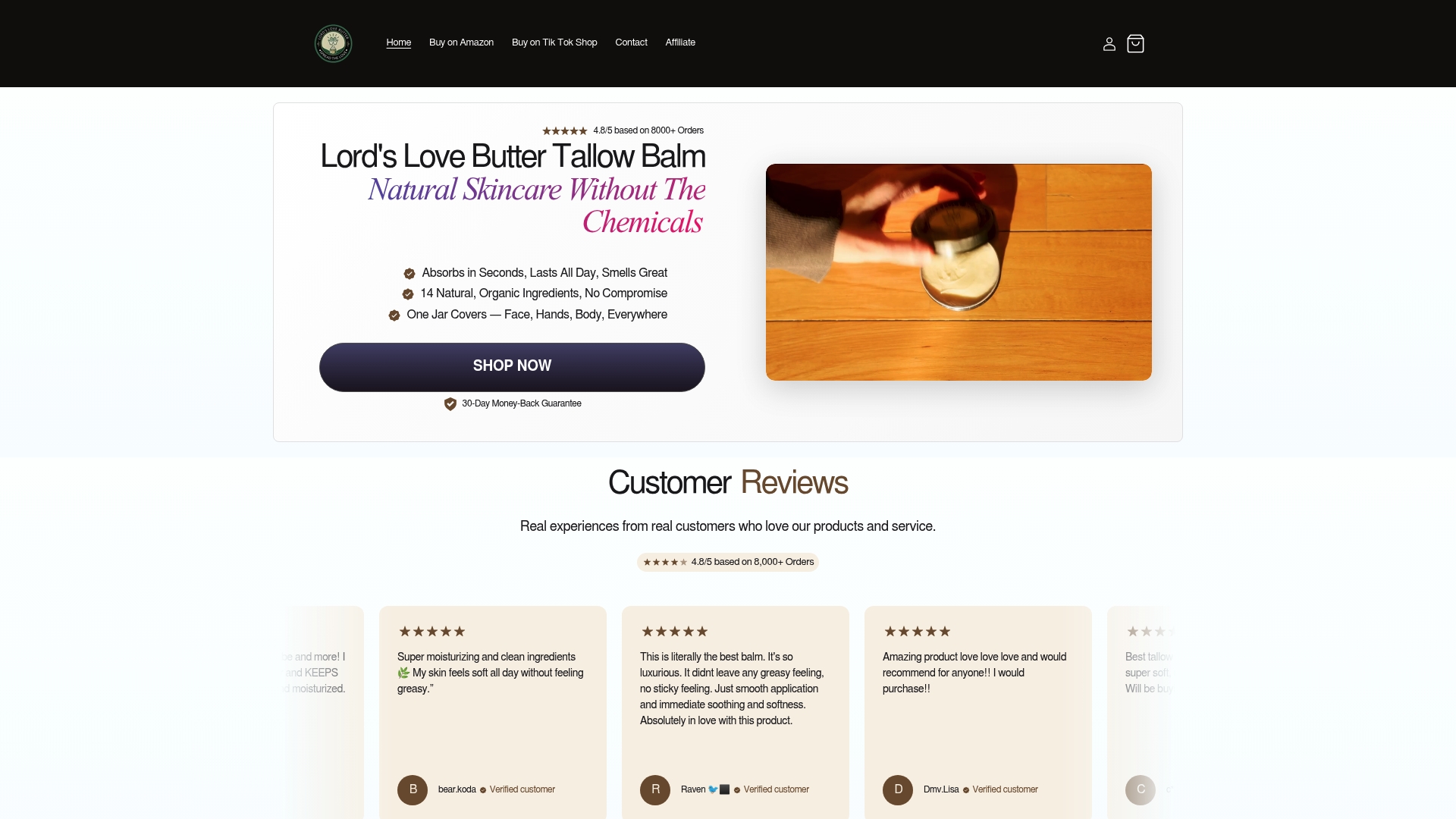
For nightly face moisture, the Whipped Beef Tallow Balm with Manuka Honey & Propolis suits most dry to normal skin. Lip care calls for the Mint Tallow Lip Balm, and outdoor days call for the Tallow Sun Balm with Zinc Oxide.
- Start with the travel tin size and patch test for 24 to 48 hours before regular use.
- The company backs its orders with a 30-day money-back guarantee.
- Browse the full collection of balms to find your fit.
Sources
- Tallow, Rendered Animal Fat, and Its Biocompatibility With Skin: A Scoping Review - PMC
- How to Use Tallow Balm in Your Daily Skincare Routine | INTEGRIS Health
- Eczema types: Nummular eczema diagnosis and treatment
FAQ
What are the disadvantages of tallow?
Tallow can feel heavy on oily or acne-prone skin, and its oleic acid content may worsen breakouts in some people. It is animal-derived, so it does not fit vegan routines, and human clinical evidence for its skin benefits remains limited according to a scoping review of biocompatibility research.
Why are dermatologists against tallow?
Dermatologists are not uniformly against tallow, but many prefer emollients with stronger clinical backing for treating diagnosed conditions like eczema. Dermatology guidance emphasizes moisturizers and ointments that trap water as important for healing, a principle tallow can support as an adjunct rather than a proven standalone treatment.
Does tallow balm really work for wrinkles?
There is no direct clinical evidence that tallow balm reduces wrinkles. Its fatty-acid profile can support hydration and barrier function, which may improve skin texture and plumpness temporarily, but this is different from a proven anti-aging effect.
Can I use tallow on my face every day?
Many people with dry to normal skin use a pea-size amount daily without issue, once they have patch tested first. Oily or acne-prone skin should start less frequently and watch for clogged pores or breakouts before committing to daily use.