
Whipped beef tallow balm can work as a chemical-free option for very dry, non-acne-prone skin, but only with caution. The evidence backing it as an eczema or psoriasis treatment is thin, and it can clog pores in people prone to breakouts. Patch test it first on a small area of skin for 24 to 48 hours before using it anywhere else. The rest of this guide covers what the research actually shows, how to apply it safely, and when to skip it entirely.
TL;DR:
- Tallow balm’s effectiveness and safety depend heavily on rendering quality and added ingredients, making patch testing crucial before full use.
- Its occlusive barrier can worsen acne-prone or oily skin by clogging pores and should be avoided on the face or broken skin.
- Visible improvements in skin texture and hydration typically require four to eight weeks of consistent, cautious nightly application.
- Product quality varies widely since makeup and cosmetics do not require FDA preapproval, raising concerns about contamination and rancidity.
- Patch testing on the inner forearm or behind the ear is essential, and avoid using tallow on children or if skin shows signs of infection or severe eczema.
Table of Contents
- What Is Tallow, and Why Does It Moisturize Skin?
- Does Tallow Actually Help Eczema and Psoriasis?
- How to Use Tallow Balm Safely on Sensitive Skin
- Who Should Avoid Tallow Balm, and When to See a Dermatologist
- Where Lord’s Love Butter Fits Into This Picture
- What Actually Matters Here
- Try the Whipped Beef Tallow Balm With Manuka Honey
- Sources
- FAQ
What Is Tallow, and Why Does It Moisturize Skin?
In this article, “tallow for tattoos” and similar phrasing refer to whipped beef tallow balm used as a whole-body moisturizer, not as fresh-tattoo aftercare. That distinction matters because most of what circulates online about tallow and skin conflates several very different use cases.
Rendered beef fat is mostly a mix of palmitic, stearic, and oleic acids, the same fatty acids found in human sebum. That similarity is why tallow feels different from a typical lotion. It sits on the skin as an occlusive layer, which slows water loss from the surface rather than pulling moisture in from the air. Health-focused reporting notes that results vary widely by formulation, and that some other oils, particularly linoleic-rich ones, may outperform tallow for certain skin concerns.
A few things determine whether a given tallow balm helps or irritates:
- Rendering quality. Poorly rendered tallow can carry impurities that irritate sensitive skin.
- Added ingredients. Manuka honey, propolis, or essential oils change both the benefit profile and the allergy risk.
- Fat ratio. Higher oleic acid content can increase transepidermal water loss in some people instead of reducing it.
- Freshness. Rancid fat smells off and can irritate skin before it ever moisturizes it.
None of this makes tallow a miracle ingredient or a dangerous one. It makes it a variable one, which is exactly why patch testing matters more here than with a standard drugstore lotion.
Does Tallow Actually Help Eczema and Psoriasis?
The honest answer is that nobody has proven it does, at least not with the kind of clinical trial data dermatologists want to see. Most support for tallow as a barrier-repair ingredient comes from its fatty-acid composition and from anecdotal reports, not from controlled studies on eczema or psoriasis populations.
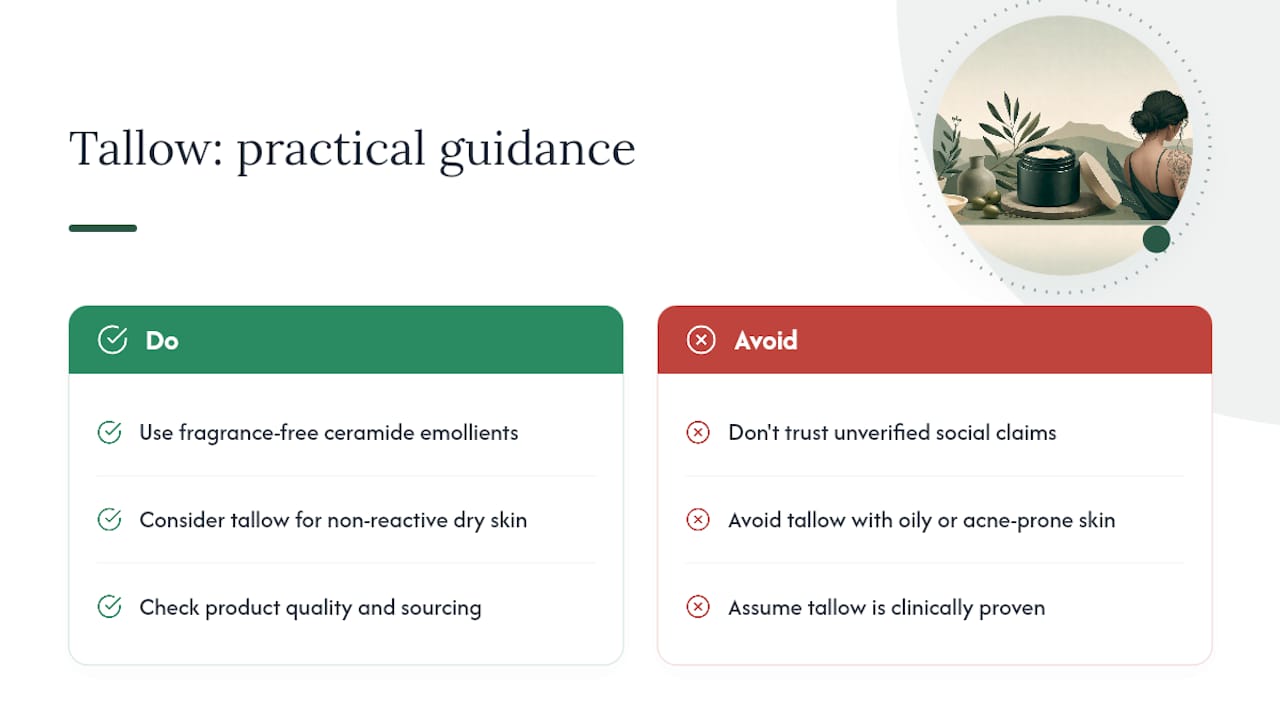
Scripps Health dermatologists point out that tallow is occlusive by nature, which means it can trap oil and debris in pores. For someone with oily or acne-prone skin, that is a real problem. For someone with genuinely dry, non-reactive skin, occlusion is often exactly the point.
Children’s Hospital of Philadelphia offers a more nuanced take: some fatty acids in tallow could theoretically support the skin barrier, but tallow can also worsen eczema in certain people, and the evidence base simply is not there yet. CHOP also notes that fragrance-free, ceramide-containing emollients remain the first-line recommendation for eczema, with tallow sitting further down the list as an experimental option.
Social-media posts promoting tallow for skin conditions often lack supporting evidence and, in some cases, show signs of financial bias from the people making the claims.
That finding comes from a 2025 scoping review that looked specifically at tallow-related skincare claims. The same review flagged another wrinkle: because tallow is animal-derived and cosmetics don’t require FDA preapproval, product quality, rendering methods, and storage practices vary a lot from brand to brand. That variability is part of why one person’s “holy grail balm” is another person’s breakout trigger.
How to Use Tallow Balm Safely on Sensitive Skin
Patch testing isn’t optional here. It’s the single step that determines whether the rest of this list is useful to you.
- Pick a test spot. Use the inner forearm or the skin behind your ear.
- Apply a pea-size amount. Rub it in fully; don’t wash that spot for the test period.
- Wait 24 to 48 hours. Some reactions take longer to appear, so watch the area for up to 72 hours if you can.
- Check for red flags. Redness, itching, burning, or new bumps mean stop immediately and don’t expand use.
- Move to a small area if clear. Try one dry patch, like an elbow or shin, for another few days before going whole-body.
Once you’ve cleared the patch test, apply tallow balm to clean, dry skin. A pea-size amount covers a surprising amount of surface area since it warms and spreads with body heat. Avoid your face if you’re at all acne-prone, and skip any skin that’s broken, cracked, or freshly irritated. Nightly use, or application right after a shower while skin is still slightly damp, tends to work best for locking in moisture.
Give it four to eight weeks of consistent nightly use before judging whether it’s doing anything for texture or persistent dry patches. That timeline lines up with what tallow-based scar care typically requires to show visible softening, and skin barrier repair moves at a similarly slow pace.
Pro Tip: Scoop balm out with a clean spatula instead of your fingers. Keeping water out of the tin is the single biggest thing you can do to prevent rancidity, since animal fats spoil faster than plant oils once contaminated.
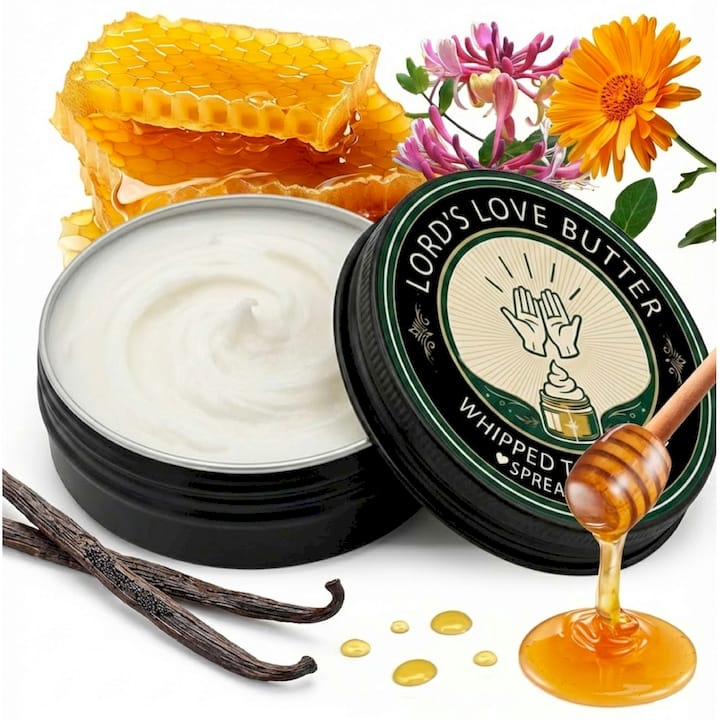
Store the tin in a cool, dark place, away from direct sun or a steamy bathroom shelf. If it ever smells off or changes color or texture, throw it out. Those changes are signs of rancid fat, and rancid fat on skin defeats the entire purpose of using something “natural” in the first place.
Who Should Avoid Tallow Balm, and When to See a Dermatologist
Tallow isn’t the right fit for everyone, and knowing that upfront saves a lot of frustration.
- Acne-prone or oily skin. The occlusive nature of tallow raises pore-clogging risk in this group specifically.
- Active skin infections or recent procedures. Wait until skin has fully healed before introducing any new occlusive product.
- Known bovine allergy. This one is rare but serious enough to rule tallow out entirely.
- Infants with severe atopic dermatitis. Get a pediatrician’s approval first. CHOP’s guidance is clear that animal-derived balms need clinical sign-off for babies with significant eczema, and the same caution applies to any baby balm made with animal fats.
Stop use and call a dermatologist if you notice a spreading rash, new pustules, signs of infection like warmth or pus, or eczema that’s visibly getting worse rather than better. None of those are “give it more time” situations. Parents weighing tallow-based products for a child’s eczema should loop in a pediatrician before starting, the same way they’d check before trying any new topical treatment on a child’s skin.
Where Lord’s Love Butter Fits Into This Picture
Some brands make whipped, grass-fed beef tallow balm with no synthetic fillers, sometimes promoted as carefully formulated by veteran-owned teams. That matters given how much product quality varies across the tallow skincare category.
Brand guidance on patch testing during pregnancy and on the four-to-eight-week timeline for softening scars reflects the same cautious, test-first approach recommended throughout this article. Customer reports cited by the brand describe improved texture and hydration within days of starting use, though individual results vary the same way they do with any skincare product. That variability is exactly why the patch-test step above isn’t a formality.
What Actually Matters Here
The conventional advice on natural skincare tends to swing between two extremes: tallow as a cure-all, or tallow as snake oil. Neither holds up. The fatty-acid profile gives it a real, plausible mechanism for occlusion and barrier support. What it lacks is the kind of clinical trial evidence that would let a dermatologist confidently prescribe it over a ceramide cream for eczema.
Where I land, based on everything above: tallow balm deserves a place in the rotation for dry, non-reactive skin, treated the way you’d treat any new product, patch test first, watch for a couple of weeks, then decide. The mistake most people make isn’t trying tallow. It’s skipping the patch test because the product is “natural” and assuming natural means risk-free. It doesn’t. Oleic acid can raise water loss in some skin types, and rancid fat irritates skin regardless of how it was sourced. Respect that, and tallow becomes a reasonable, low-cost addition to a dry-skin routine rather than a gamble.
— Michael
Try the Whipped Beef Tallow Balm With Manuka Honey
Lordslovebutter’s Whipped Beef Tallow Balm with Manuka Honey & Propolis is built specifically for the reader this guide describes: someone with persistently dry skin who wants a chemical-free option without synthetic fillers or fragrance additives.
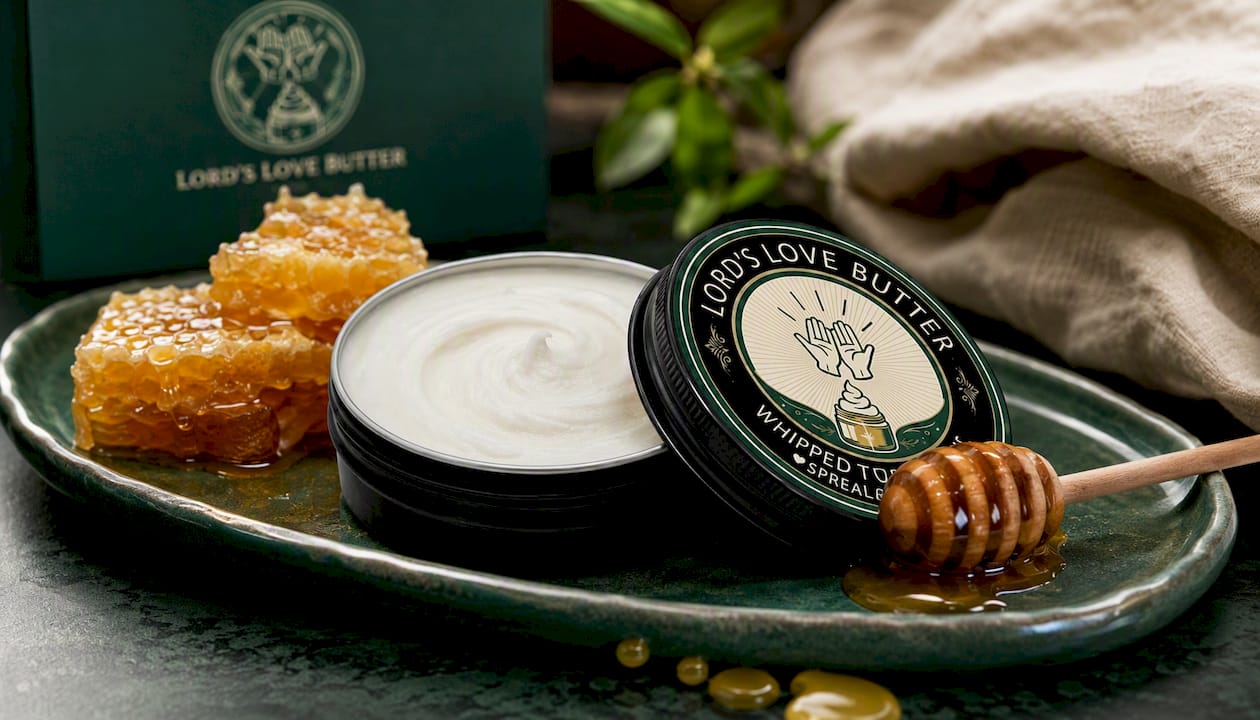
Smaller tins are sometimes sized for testing before committing to larger jars. These products are typically used on rough elbows, shins, and other dry patches, often applied nightly after showering. Manuka honey and propolis add antibacterial properties on top of tallow’s occlusive base, which is part of why it also shows up in guidance on tallow for itch relief. Still patch test it first, especially if you know your skin reacts to new ingredients. If texture and scars are your main concern, pair this with realistic expectations. Dermatology resources on skin texture treatment confirm that visible change takes weeks, not days, no matter what product you use.
This article is general information, not a substitute for advice from a qualified doctor. Consult a qualified healthcare professional about your own circumstances before acting on anything here.
Sources
- Beef Tallow in Skin Care: Safety, Benefits and Risks — Scripps Health
- Is beef tallow a good treatment for eczema? | Children’s Hospital of Philadelphia
- Scoping review of tallow-related skincare claims and evidence — PMC
- Beef tallow: Health benefits, cooking and skin care — Health US News
FAQ
Can You Use Tallow Balm on Eczema-Prone Skin?
Some people with dry, eczema-prone skin tolerate tallow balm well, but CHOP notes it can also worsen eczema in others, so patch testing first is essential.
How Long Should I Patch Test Before Full Use?
Apply a pea-size amount to your inner forearm and wait 24 to 48 hours, watching for redness, itching, or bumps before using it elsewhere.
Will Tallow Balm Clog My Pores?
It can, particularly if you have oily or acne-prone skin, since tallow is occlusive by nature; avoid using it on your face if breakouts are a concern.
How Long Until I See Results From Tallow Balm?
Hydration improvements can appear within days for some users, while texture changes like softened scars typically take four to eight weeks of nightly use.
Is Lordslovebutter’s Balm Safe for Children?
Consult a pediatrician before using any animal-derived balm on a child with significant eczema, and always patch test on a small area first regardless of age.