

Natural Skin Balm Guide for Dry and Sensitive Skin
For dry or sensitive skin, a natural skin balm is often the most direct solution: it seals moisture, delivers concentrated botanicals, and skips the water, preservatives, and synthetic fillers that irritate reactive skin. If you want one product to start with, Lordslovebutter’s Whipped Beef Tallow Balm with Manuka Honey is the publisher’s pick — grass-fed tallow, raw Manuka honey, waterless formula, and made by a veteran-owned brand that lists every ingredient.
Quick orientation:
- What it is and how it differs from lotion → Section 2
- Which ingredients help (and which to avoid) → Section 3
- How to use it correctly → Section 6
- How to make a small batch at home → Section 7
- Why Lordslovebutter’s formula stands out → Section 8
Table of Contents
- What is a natural skin balm, and how does it differ from lotion?
- What ingredients should you look for in a natural skin balm?
- How do balms actually help dry or sensitive skin?
- Safety, allergy cautions, and when not to use a balm
- How to apply a balm for the best results
- How to make a simple natural skin balm at home
- Why Lordslovebutter’s whipped tallow balms work for dry and sensitive skin
- Key Takeaways
- Why ingredient transparency changes everything for sensitive skin
- Ready to try Lordslovebutter’s whipped tallow balm?
- Useful sources for further reading
What is a natural skin balm, and how does it differ from lotion?
A balm is a waterless, oil-and-wax-based topical. No water means no need for preservatives, and no dilution of the active ingredients. The wax creates an occlusive layer on the skin’s surface that slows moisture loss; the oils and butters deliver fatty acids and botanicals directly to the barrier. That is the core mechanic, and it is fundamentally different from how a lotion works.
Herbalists have relied on simple herb-oil-wax combinations for general skin comfort and barrier support for centuries. The modern version is the same idea with better sourcing.
Balm vs. lotion vs. ointment at a glance:
- Balm: waterless, oil + wax base; high occlusion; concentrated actives; best for dry patches, barrier repair, chapped skin
- Lotion: water + oil emulsion; lighter feel; lower occlusion; best for general daily hydration on normal skin
- Ointment: petroleum or heavy wax base; maximum occlusion; minimal actives; best for acute wound protection
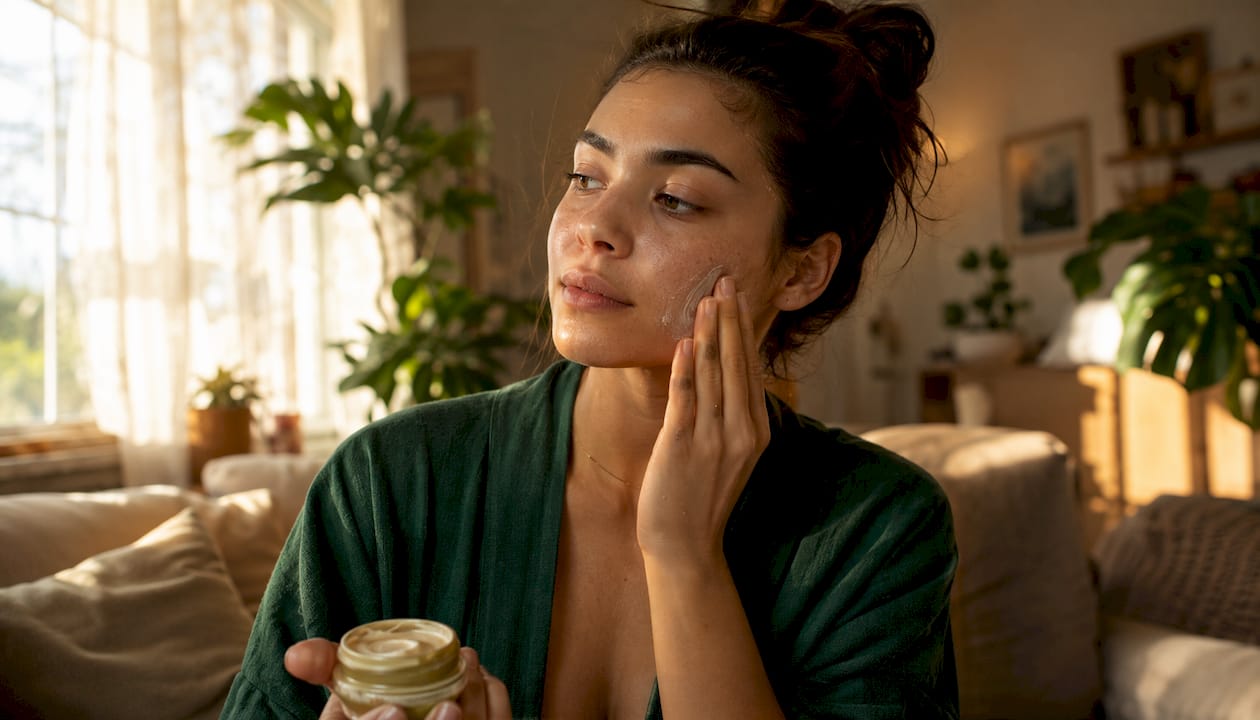
Where a balm fits in your routine: apply it last, after any serums or lighter moisturizers, so it seals everything underneath. On the face, apply sunscreen over the balm before makeup, and give it a few minutes to settle first.
What ingredients should you look for in a natural skin balm?
The ingredient list is the whole story. A short, recognizable list of stable oils, a structural wax, and one or two targeted actives is almost always better than a long list of botanical extracts that appear in trace amounts.
Ingredients worth seeking out
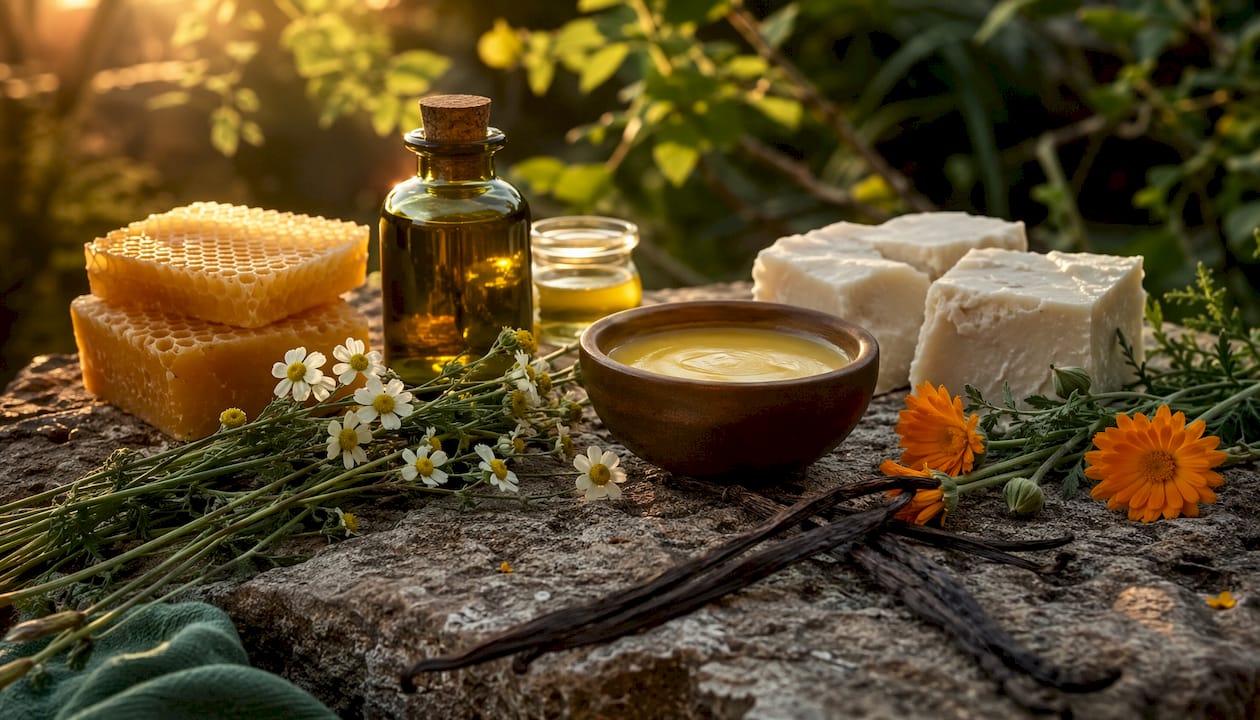
- Grass-fed beef tallow: its fatty-acid profile closely mirrors human skin lipids, which is why it has been used for barrier repair and baby-safe applications for generations. When properly rendered and purified, it is non-comedogenic and gentle on sensitive skin.
- Beeswax: the structural backbone of most balms. Pure beeswax creates a breathable barrier that protects against wind, pollution, and cold without suffocating the skin.
- Jojoba oil: technically a liquid wax ester, not an oil. It closely resembles the skin’s own sebum, absorbs without greasiness, and has a long shelf life.
- Babassu oil: lighter than coconut oil, faster-absorbing, and non-pore-clogging. A good choice for face-use balms.
- Calendula: an infused herb with a long track record for calming irritated or inflamed skin. Look for it as a calendula-infused oil, not just a fragrance.
- Rosehip oil: rich in essential fatty acids and naturally occurring vitamin A; supports skin texture and tone over time.
- Sea buckthorn: exceptionally high in natural vitamin C and carotenoids; brightening and restorative, though it adds an orange tint in high concentrations.
- Manuka honey: used for its wound-healing and antimicrobial properties. In a waterless balm, it contributes humectant activity and targeted skin repair.
- Frankincense resin oil: astringent and toning; widely considered useful for mature or scarred skin.
- Carrot seed oil: supports complexion clarity and is a good addition for skin over 35.
Ingredients to approach carefully
- Essential oils in high concentrations: lavender, peppermint, citrus, and eucalyptus are common sensitizers, especially on broken or eczema-prone skin. A well-formulated balm uses them at low levels or not at all.
- Synthetic fragrance: listed as “fragrance” or “parfum” on a label, this is a catch-all term that can include dozens of undisclosed chemicals. Skip it entirely for sensitive skin.
- Lanolin: derived from sheep’s wool; effective but a known allergen for some people. If you have never used it, patch-test first.
- Dyes and colorants: no functional benefit; pure irritation risk.
Label-reading tips
Ingredients are listed in descending order by concentration. If beeswax or tallow appears in the first three ingredients, the formula is genuinely balm-forward. A “natural” product that lists water first is a lotion, not a balm, regardless of what the marketing says. “Waterless” on the label is a meaningful claim when the ingredient list confirms it.
Pro Tip: If an ingredient list runs longer than 15 items, look at what appears after the 10th ingredient. Anything in trace amounts at the end of a long list contributes almost nothing to performance — it is usually there for marketing copy, not your skin.
How do balms actually help dry or sensitive skin?
The mechanism is straightforward: occlusives slow transepidermal water loss, which is the main driver of dry, tight, flaky skin. A balm applied over slightly damp skin traps surface moisture and holds it against the barrier while the fatty acids in the oils work to replenish the lipid matrix underneath.
For sensitive or eczema-prone skin, the anti-inflammatory botanicals matter as much as the occlusion. Calendula, tallow’s conjugated linoleic acid content, and Manuka honey’s bioactive compounds all contribute to calming the inflammatory response that keeps compromised skin in a cycle of flare and repair.
What to expect, realistically:
- Immediate: reduced tightness, comfort within minutes of application
- Days 3–7: visible reduction in flaking and rough texture for most users; some report improved texture within days of switching from synthetic lotions
- Weeks 2–6: meaningful barrier rebuilding; reduced flare frequency for eczema-prone skin
One balm used consistently can also reduce the number of skincare steps needed, replacing several lighter moisturizers with a single concentrated product.
Pro Tip: Apply the balm within 60 seconds of patting skin dry. The window for trapping surface moisture is short — applying to slightly damp skin produces noticeably deeper hydration than applying to completely dry skin.
Safety, allergy cautions, and when not to use a balm
Most natural balms are well-tolerated, but “natural” does not mean “reaction-proof.” A patch test before full-face or full-body use is non-negotiable for sensitive skin.
How to patch-test in three steps
- Apply a small amount of balm to the inner forearm or behind the ear.
- Leave it on for 24 hours without washing the area.
- Check for redness, itching, or swelling. If none appears, the product is likely safe for broader use.
Essential oil cautions
Naturally scented balms can still contain sensitizing compounds. Limonene, geraniol, linalool, and citronellol are naturally occurring in many essential oils and are listed separately on compliant ingredient labels. If your skin reacts to citrus or floral products, check for these even in “natural” formulas.
When to hold off or consult a clinician:
- Open wounds or actively infected skin: an occlusive balm can trap bacteria
- Severe or undiagnosed inflammatory conditions: get a diagnosis before self-treating
- Prescribed topical steroids: a balm can support barrier repair alongside steroid treatment, but it is not a replacement for prescribed medication without clinician approval
- Infants under 3 months: consult a pediatrician before introducing any new topical, even a simple tallow balm
For face use, a pea-size amount is enough. More is not better; excess product just sits on the surface.
This article is general information, not medical advice. For a diagnosed skin condition, confirm the right approach with a dermatologist or your primary care provider.
How to apply a balm for the best results
Step-by-step application
- Cleanse and pat skin until just slightly damp, not dripping.
- Warm a pea-size amount between your fingertips for 5–10 seconds until it softens.
- Press and smooth onto problem areas first: eczema patches, elbows, knuckles, around the nose.
- Spread any remaining product over the broader area.
- Give it 2–3 minutes before layering anything else on top.
Use cases by area
- Face (night treatment): apply a slightly heavier layer before bed; wake to noticeably softer skin
- Eczema patches: spot-treat morning and night; consistency matters more than quantity
- Lips and cuticles: a tiny amount goes a long way; reapply after washing hands
- Elbows and heels: these areas need more product and more time; apply before socks or sleeves to lock in warmth
- Whole-body winter barrier repair: a chemical-free moisturizing routine that seals with a waterless balm is especially effective during colder months when indoor heating strips ambient humidity
Layering rules
Balm goes last in any routine. If you use a serum or a lighter moisturizer, apply those first and let them absorb, then seal with the balm. Before makeup, apply sunscreen over the balm and wait at least 3 minutes before foundation. A whipped balm texture spreads more easily and leaves less residue than a hard stick balm, which makes layering under makeup more practical.
How to make a simple natural skin balm at home
Small-batch DIY balms are genuinely easy. The
is melt, mix, cool, and jar. The most common failures come from overheating the oils or cooling too fast, not from the recipe itself.
Small-batch recipe (makes approximately 2 oz)
Ingredients:
- 1 tablespoon beeswax pellets
- 2 tablespoons jojoba oil (or a blend of jojoba and tallow)
- 1 teaspoon calendula-infused oil (optional but recommended for sensitive skin)
- 1/4 teaspoon raw Manuka honey (optional; stir in off-heat)
- 3–5 drops of a skin-safe essential oil such as lavender or frankincense (optional; add last)
Steps
- Combine beeswax and carrier oils in a heat-safe glass jar set in a small pot of simmering water (double boiler method).
- Stir gently until the beeswax is fully melted, then remove from heat immediately. Do not boil.
- Let the mixture cool to around 120°F before adding honey or essential oils. Adding them while the mixture is too hot degrades their actives.
- Pour into a clean tin or small glass jar.
- Leave undisturbed at room temperature until fully set, at least 2 hours. Do not refrigerate to speed setting; that causes grainy texture.
- Label with the date and ingredients.
Shelf life and troubleshooting
Waterless balms typically last 6–12 months when stored in a cool, dark place. Use stable carrier oils like jojoba or tallow; high-PUFA oils like flaxseed go rancid quickly unless you add vitamin E as an antioxidant.
Common problems:
- Grainy texture: oils cooled too quickly or were reheated after partial setting; melt again slowly and cool at room temperature
- Separation: water contamination (from honey added too hot or wet utensils); keep everything dry
- Rancid smell within weeks: the carrier oil was already old; always use fresh oils and store finished balm away from heat and light
Why Lordslovebutter’s whipped tallow balms work for dry and sensitive skin
Lordslovebutter’s core product is a whipped grass-fed beef tallow balm with Manuka honey, available in a 2.4 oz tin and a 2.4 oz jar. Both formats use the same formulation; the tin is compact and travel-friendly, while the jar is easier to scoop for whole-body use at home.
Why the formula is well-suited to sensitive and dry skin:
- Grass-fed tallow base: tallow’s fatty-acid profile is closely compatible with human skin barrier lipids, which is why it absorbs without the greasy residue that heavier petroleum-based ointments leave behind
- Manuka honey: contributes humectant and wound-healing properties; a meaningful addition for eczema-prone or cracked skin, not a marketing ingredient
- Waterless concentration: because there is no water in the formula, a pea-size amount delivers the full concentration of actives; no preservatives needed
- Whipped texture: the whipping process improves spreadability and reduces the heavy, waxy feel that puts many people off traditional tallow products
The brand is veteran-owned and publishes its full ingredient list without proprietary blends or vague “fragrance” entries. For parents, the tallow base has a documented history of use on infant and delicate skin when properly rendered. For adults managing eczema or psoriasis, it supports barrier repair as a complement to, not a replacement for, any prescribed treatment.
Key Takeaways
Waterless balms outperform lotions for dry and sensitive skin because they deliver concentrated actives and seal moisture without synthetic preservatives or fillers.
| Point | Details |
|---|---|
| Waterless formula advantage | No water means no preservatives needed and higher concentration of active ingredients per application. |
| Key ingredients to seek | Grass-fed tallow, beeswax, jojoba, calendula, and Manuka honey are the most effective and well-tolerated options for dry or sensitive skin. |
| Application technique | Apply to slightly damp skin within 60 seconds of patting dry; a pea-size amount is enough for most areas. |
| Safety first | Always patch-test on the inner forearm for 24 hours; do not replace prescribed topical steroids without clinician approval. |
| Lordslovebutter recommendation | The Whipped Beef Tallow Balm with Manuka Honey (tin or jar) is a waterless, veteran-owned option with full ingredient transparency for dry and sensitive skin. |
Why ingredient transparency changes everything for sensitive skin
The skincare industry has a transparency problem, and people with sensitive or eczema-prone skin pay for it most. A product can be labeled “natural,” “clean,” or “botanical” while still containing synthetic fragrance, undisclosed preservative blends, or sensitizing essential oils at concentrations that trigger reactions. The label tells you almost nothing unless you read the full ingredient list.
What I find genuinely useful about the tallow-and-honey approach is how few places there are to hide. A short ingredient list with recognizable components is not a marketing limitation. It is a quality signal. When a brand publishes every ingredient without proprietary blends, you can actually evaluate what you are putting on your skin, look up each component, and make an informed decision. That is rare.
Veteran-owned businesses in the natural skincare space tend to operate with a similar directness. There is less tolerance for vague claims and more emphasis on what the product actually does. Lordslovebutter fits that pattern: the formulation is simple, the sourcing is specific (grass-fed tallow, Manuka honey), and the results customers report are consistent with what the ingredients are known to do.
For anyone managing a chronic skin condition, that kind of transparency is not a nice-to-have. It is the baseline for trusting a product enough to use it consistently.
Ready to try Lordslovebutter’s whipped tallow balm?
Dry and sensitive skin deserves a formula with nothing to hide. Lordslovebutter’s whipped beef tallow balm delivers grass-fed tallow, Manuka honey, and zero synthetic fillers in a waterless formula that works from the first application.
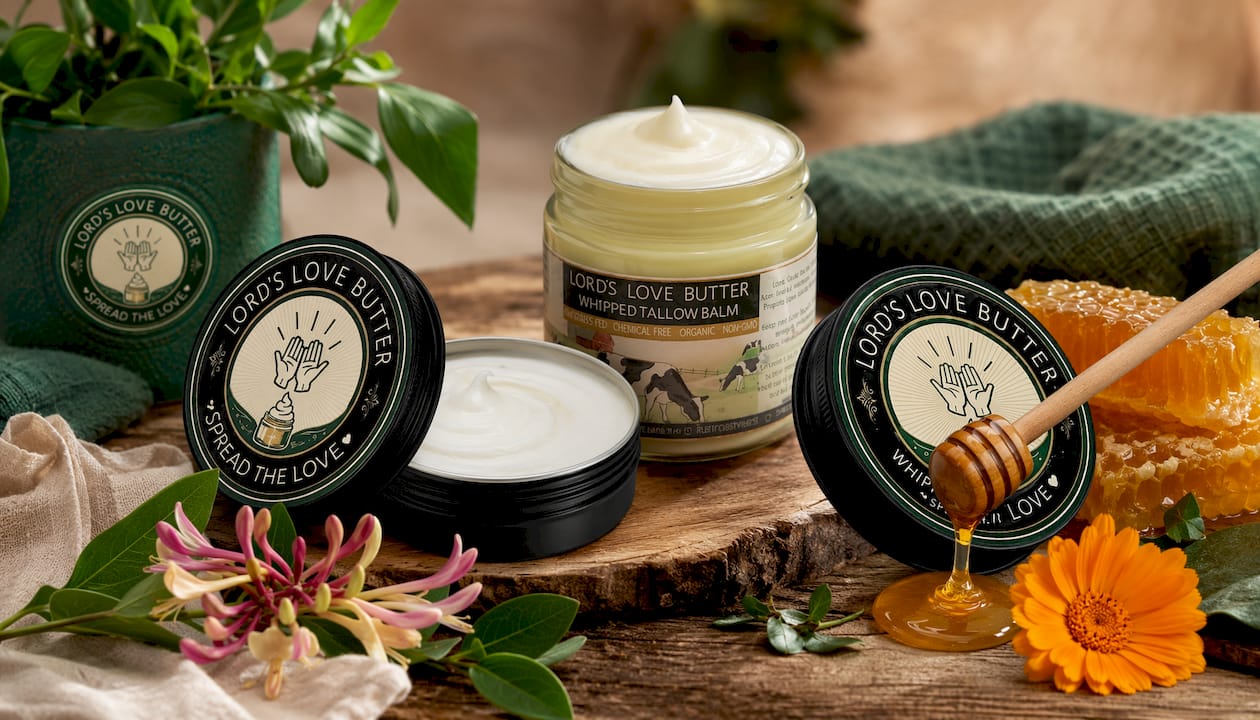
For first-time buyers, the Tin & Jar Bundle is the smartest starting point: you get both formats to test which works best for your routine, and it makes a practical gift for anyone dealing with dry or eczema-prone skin. If you want to start with one size, the 2.4 oz tin is compact enough to carry and generous enough to cover problem areas for weeks. The jar format suits whole-body use or households where multiple people share the same product.
Patch-test on your inner forearm before full-face use, especially if your skin is reactive. Orders ship directly from the brand. Visit lordslovebutter.com to check current availability and place your order.
Useful sources for further reading
- Whipped Beef Tallow Balm with Manuka Honey (Tin) — full ingredient list and product specs for the tin SKU
- Whipped Beef Tallow Balm with Manuka Honey (Jar) — jar format specs and usage notes
- Tin & Jar Bundle — bundle purchase page for gifting or multi-format trial
- How Natural Balms Seal Moisture for Dry Skin — technical explanation of the damp-skin application technique and waterless occlusion
- Grass-Fed Tallow Baby Balm Benefits for Soft Skin — tallow’s lipid profile and suitability for delicate or infant skin
- Natural Balm vs. Steroid Cream Explained for Eczema — clinical-adjacent guidance on when balms support eczema care and when to follow medical advice
- Natural Baby Skin Moisturizers Types: A Parent’s Guide — parent-focused guide to selecting gentle balms for infants and toddlers
- The Natural Choice: Why You Should Make a Herbal Balm — herbalist perspective on the tradition of simple herb-oil-wax balms for skin comfort and barrier support

