

Are PEGs Really Harmful to Your Skin? Here's the Truth
PEGs are not universally dangerous, but they are not risk-free either. On intact, healthy skin, most polyethylene glycol derivatives cause no problems. On broken, inflamed, or compromised skin, the calculation changes: PEGs act as penetration enhancers, they can carry manufacturing contaminants that never show up on the label, and in rare cases they trigger hypersensitivity reactions, including anaphylaxis.
Three mechanisms drive nearly every legitimate concern about PEGs in skincare:
- Penetration enhancement: PEGs increase how much of everything else in a formula gets absorbed, which matters more when your skin barrier is already damaged.
- Contamination from ethoxylation: the manufacturing process can leave behind ethylene oxide and 1,4-dioxane, neither of which appears anywhere on an ingredient list.
- Hypersensitivity: uncommon, but documented anaphylaxis cases tied to PEG exposure exist in the medical record.
If your skin is cracked, eczema-flared, or freshly post-procedure, skip PEG-heavy products until it heals, and patch-test anything new for 48 hours before applying it broadly.
Key Takeaways
PEGs pose meaningful risk mainly through penetration enhancement, undisclosed manufacturing contaminants, and rare hypersensitivity, not through routine use on healthy, intact skin.
| Point | Details |
|---|---|
| Skin condition determines risk | PEGs are generally tolerated on intact skin but riskier on damaged, inflamed, or post-procedure skin. |
| Penetration enhancement is the core mechanism | PEGs increase absorption of co-ingredients, raising exposure when the barrier is already compromised. |
| Contaminants aren’t labeled | Ethylene oxide and 1,4-dioxane can form during ethoxylation and never appear on the ingredient list. |
| Certification helps close the gap | Green Seal and MADE SAFE both point to contaminant-screened products as the practical safeguard. |
| PEG-free balms simplify the routine | Lordslovebutter’s tallow balms skip ethoxylated ingredients entirely, suiting sensitive or barrier-compromised skin. |
Table of Contents
- Why PEGs Harmful Skin Explained: What These Ingredients Actually Are
- How PEGs Can Harm Skin: Penetration, Contamination, and What the Research Says
- Who Should Avoid PEGs and What Symptoms Mean Stop Using It
- How to Read Ingredient Labels and Cut Your PEG Exposure
- Safer Alternatives When You Want to Skip PEGs Entirely
- Does PEG Molecular Weight and Concentration Change the Risk?
- What Happens With Long-Term PEG Use on Skin
- A PEG-Free Option Worth Trying for Barrier Repair
- Frequently Asked Questions
- Sources
Why PEGs Harmful Skin Explained: What These Ingredients Actually Are
PEGs, short for polyethylene glycols, are not one ingredient. They are a family of polymers built by reacting ethylene oxide, and the number attached to the name (PEG-8, PEG-100, PEG-150) tells you the molecular weight. Lower numbers mean smaller, lighter molecules that move more easily; higher numbers mean thicker, larger molecules that mostly sit on the surface.
Formulators reach for PEGs because they are cheap, stable, and versatile. In a typical cream or cleanser, a PEG derivative might work as an emulsifier holding oil and water together, a surfactant that helps a cleanser foam and rinse clean, a humectant pulling moisture to the skin, or simply a solvent that keeps active ingredients dissolved.
Spotting them on a label takes a little practice. Look for:
- Anything starting with “PEG” followed by a number
- Ingredients ending in “-eth” (laureth, ceteth, steareth)
- “Oleth” compounds
- PEG castor oils, often listed as “PEG-40 hydrogenated castor oil”
None of these names are hidden or disguised. They are just easy to skim past if you don’t know what you’re scanning for.
How PEGs Can Harm Skin: Penetration, Contamination, and What the Research Says
The penetration issue is the one dermatologists bring up most. PEGs don’t just sit on top of skin. They temporarily loosen the tight structure of the outer barrier, which is exactly why formulators use them to help other ingredients absorb. A PubMed review on PEGs as penetration enhancers confirms this mechanism directly: PEGs increase absorption of whatever else is riding along in the same formula. On intact skin, that’s usually a minor, easily managed effect. On a compromised barrier, it means more of every co-ingredient, including preservatives and fragrance compounds, gets in deeper than it normally would.
Contamination is the second, murkier problem. Ethoxylation, the process used to manufacture PEGs, can leave trace amounts of ethylene oxide and 1,4-dioxane behind as byproducts. Neither contaminant is a deliberate ingredient, so neither is required to appear on a label.
Because these byproducts form during manufacturing rather than being added intentionally, MADE SAFE points out that consumers can’t reasonably screen for them just by reading an ingredient list. The only practical defense is choosing brands that test for and disclose contaminant levels, or that carry a certification requiring it.
So what does the actual peer-reviewed evidence say? A review published through NCBI found PEGs generally non-toxic on intact, healthy skin, but flagged them as unsafe for damaged or compromised skin, where irritation and even systemic toxicity become plausible outcomes. A separate review of PEG derivatives reached a similar, more measured conclusion: most PEG compounds are widely used and considered safe under normal cosmetic conditions, but because the PEG family is so broad, some individual derivatives still warrant continued monitoring. That’s not a dismissal of the concern. It’s a distinction between “generally fine” and “fine for everyone, always.”
Who Should Avoid PEGs and What Symptoms Mean Stop Using It
If you fall into one of these groups, treat PEG-containing products with more caution than the average shopper would:
- Eczema or psoriasis patients, whose barrier is already compromised in ways that make penetration enhancement more consequential.
- Anyone with post-procedure skin, including recent chemical peels, laser treatments, or microneedling.
- People with open wounds, cuts, or active dermatitis, where PEGs have the clearest documented risk.
- Anyone with a known PEG allergy or prior hypersensitivity reaction, even a mild one.
Watch for two different timelines. Immediate irritation, redness, stinging, or itching within minutes to hours, tells you to stop and rinse. Rare but serious reactions, including hives, facial swelling, or difficulty breathing, are signs of a possible anaphylactic response and require emergency care, not a wait-and-see approach. Cumulative effects are subtler: mild dryness or barrier weakening that builds over weeks of repeated use on already-stressed skin.
How to Read Ingredient Labels and Cut Your PEG Exposure
You don’t need a chemistry degree to reduce your exposure. Three steps cover most of it.
- Scan the INCI list systematically. Read every ingredient name, not just the front five. PEGs and ethoxylated compounds (anything with “PEG,” “-eth,” or “oleth” in the name) can appear anywhere on the list, including near the bottom in smaller concentrations.
- Think about product form. EWG’s Skin Deep database notes higher hazard scoring for PEGs in inhalable formats like sprays, since airborne exposure adds a route of contact that a cream or balm doesn’t have. If you’re already cautious about PEGs, skip the spray version of a product and choose a cream, balm, or stick instead.
- Look for certification, not just marketing language. Labels like Green Seal or MADE SAFE require contaminant screening that a plain “natural” claim doesn’t guarantee.
For a deeper walkthrough of ingredient names and what they signal, our guide on reading skincare labels effectively breaks down the same suffixes and prefixes with more examples.
Pro Tip: Keep a running list of ingredient names that have caused you trouble in the past. Take a photo of the ingredient panel before you buy anything, and cross-check it at home rather than in the aisle under time pressure.
Safer Alternatives When You Want to Skip PEGs Entirely
Reactive or barrier-compromised skin generally does better with fewer moving parts. A minimal-ingredient moisturizer built around a handful of recognizable ingredients gives you less to react to and makes it easier to identify a trigger if one shows up.
- Simple occlusive balms that physically seal moisture in without relying on ethoxylated emulsifiers
- Plant-derived, non-ethoxylated emulsifying waxes in place of PEG-based versions
- Animal-fat-based balms, which naturally mimic skin’s own lipid structure without needing a synthetic emulsifier at all
This is where tallow-based balms earn their reputation. Because rendered tallow already contains a lipid profile close to human sebum, it doesn’t need a PEG derivative to blend or stabilize. That’s the whole appeal for barrier repair: fewer synthetic go-betweens, less penetration-enhancing chemistry, and a shorter ingredient list to evaluate.
Does PEG Molecular Weight and Concentration Change the Risk?
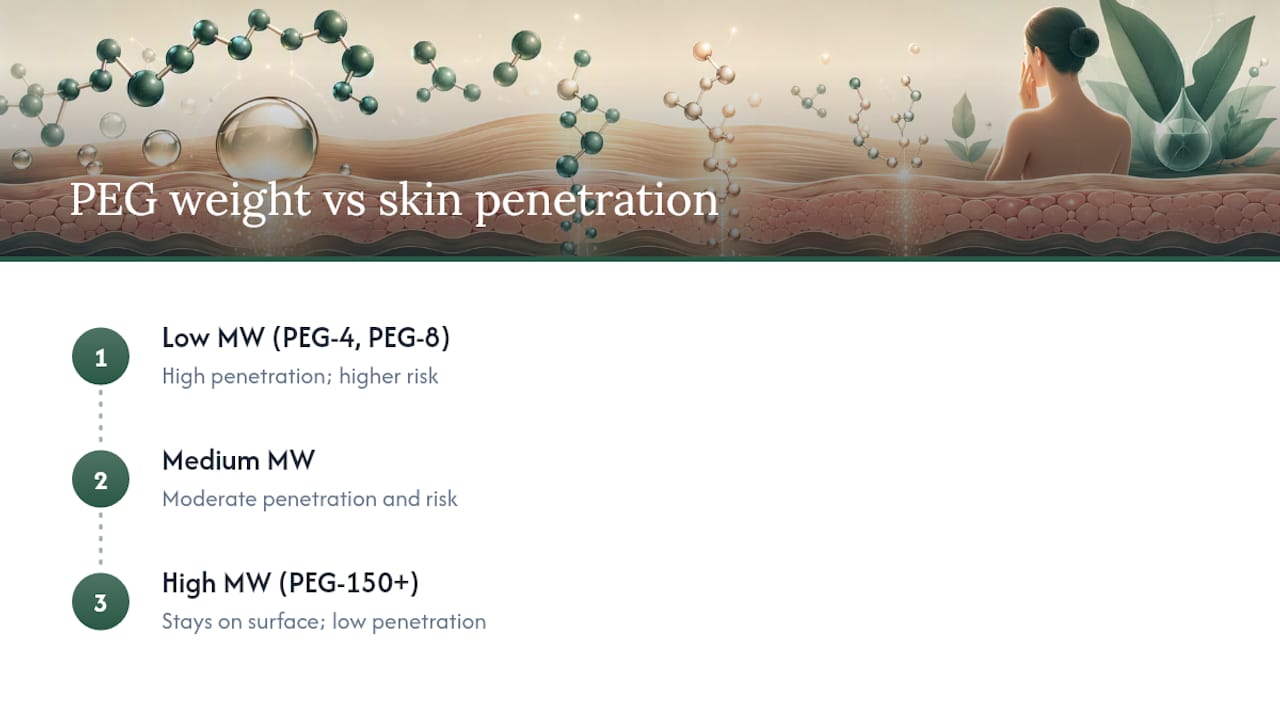
Not all PEGs behave the same way, and weight is the main reason why. Lower-molecular-weight PEGs, the small numbers like PEG-4 or PEG-8, are more likely to penetrate skin because their molecules are simply small enough to move through it. Higher-molecular-weight PEGs, like PEG-150 or above, tend to stay on the surface, functioning more like a thickener or stabilizer than a delivery vehicle.
This matters practically. A face cream loaded with a low-weight PEG as a solvent behaves very differently on your skin than a cleanser using a high-weight PEG purely to stabilize foam, even though both list “PEG” on the label.
The problem is that ingredient labels don’t disclose concentration, and most consumers have no easy way to look up a specific PEG’s molecular weight from the name alone. That asymmetry is part of why reviewers, including the NCBI review of PEG derivatives, stop short of blanket safety statements and instead call for continued monitoring across the full range of PEG compounds. When you can’t verify weight or concentration yourself, the more reliable strategy is choosing products that minimize ethoxylated ingredients altogether rather than trying to calculate risk ingredient by ingredient.
What Happens With Long-Term PEG Use on Skin
Short-term studies dominate the PEG safety literature, which is itself worth noting. Most of the research supporting “generally safe” conclusions looks at intended, short-duration cosmetic use rather than years of daily application layered across multiple products.
For people with healthy, intact skin using a PEG-containing cleanser or lotion occasionally, the long-term picture looks reassuring based on current evidence. The concern builds with cumulative exposure across a full routine, cleanser, moisturizer, sunscreen, and makeup, each contributing small amounts of PEG derivatives and potentially trace contaminants day after day. Reviewers describe this as a reason for ongoing monitoring rather than alarm, but it’s a real gap between “safe in a single formula” and “safe across a decade of layered daily use.”
Barrier function is the other long-term variable. Repeated penetration enhancement, even at low levels, may keep an already-stressed barrier from fully recovering, which is why dermatology guidance consistently separates intact skin from compromised skin rather than issuing one blanket rule. If you’ve dealt with chronic eczema or psoriasis flares for years, the accumulated exposure question deserves more weight than it would for someone with resilient, healthy skin using the same products occasionally.
A Practical Take on Caution Without Panic
Most people don’t need to panic about a PEG on a label. What actually matters is context: intact skin versus damaged skin, occasional use versus a stacked daily routine. My rule is simple. Patch-test anything new for 48 hours, and if your skin is already compromised, reach for PEG-free options first rather than troubleshooting after a reaction. Our posts on how skin tolerates new products and reading ingredient labels walk through both steps in more detail. Caution beats guesswork, but it shouldn’t tip into fear over an ingredient that’s fine for most people, most of the time.
A PEG-Free Option Worth Trying for Barrier Repair
If you’d rather skip the label-scanning altogether, Lordslovebutter builds every balm around rendered grass-fed tallow with no PEGs, no ethoxylated emulsifiers, and no synthetic penetration enhancers in the formula. Because the ingredient list stays short, there’s less for a reactive barrier to fight against.
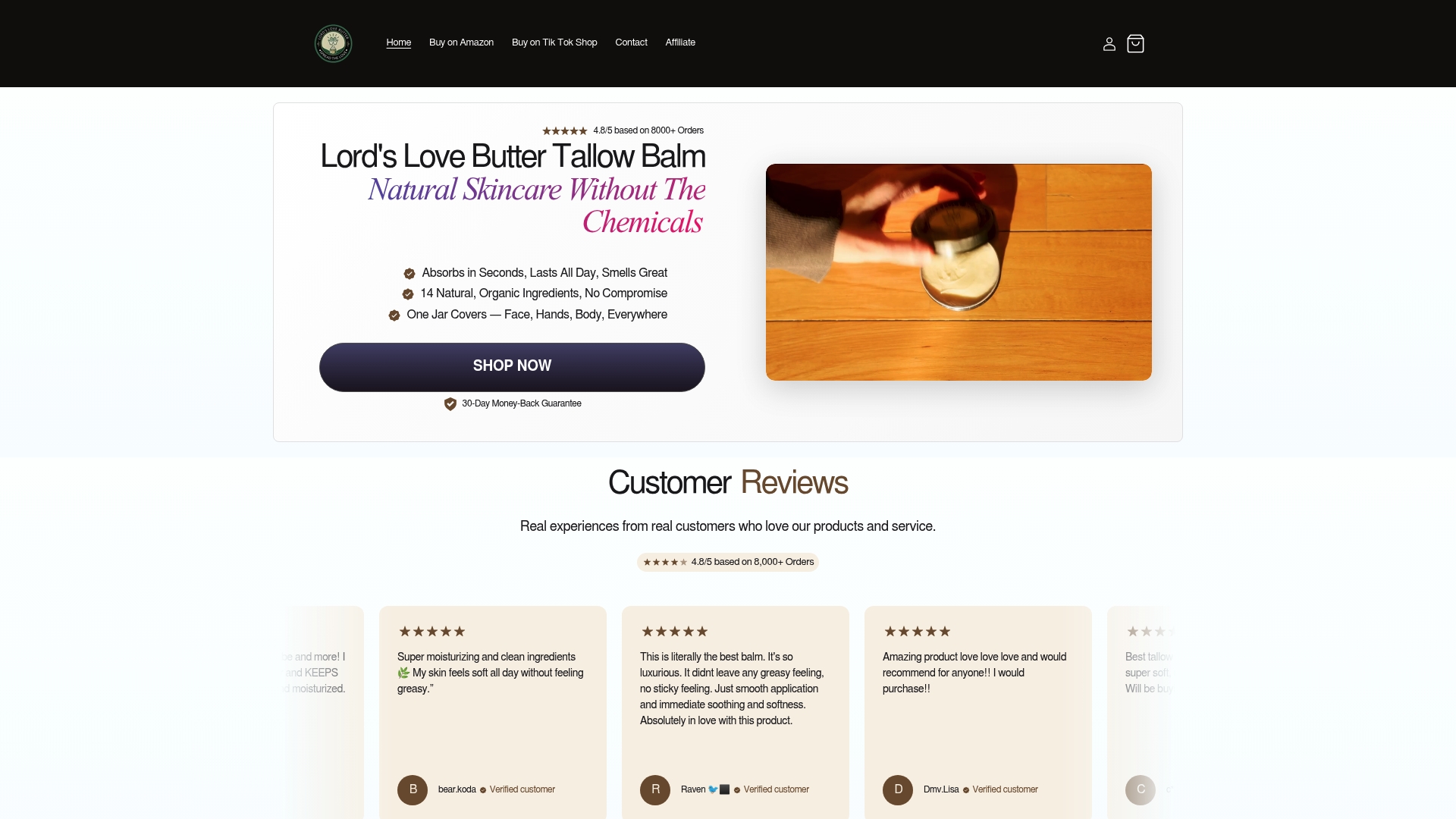
Different products suit different needs. The Whipped Beef Tallow Balm with Manuka Honey works well for whole-body dryness and general barrier repair. The Original Beef Tallow Balm Lite with Manuka Honey is a lighter option for the face or areas prone to clogging. For irritated or reactive patches, the Tallow Lite Double with Manuka Honey and Propolis offers extra soothing strength, and the Mint Beef Tallow Lip Balm Stick covers dry lips without introducing anything synthetic.
As always, patch-test on intact skin first, avoid open wounds until they’ve closed, and check with a dermatologist if you have a known severe allergy or a serious flare. If you’re ready to start, browse the full balm lineup and pick the format that matches where your skin needs help most.
Frequently Asked Questions
Are PEGs banned in any skincare products? No blanket ban exists in the United States. Regulatory guidance focuses on contamination limits and safe concentrations rather than prohibiting PEGs outright.
Can PEGs cause acne or clogged pores? Some PEG derivatives, particularly certain PEG castor oils, are comedogenic for acne-prone skin, though reactions vary by individual and by the specific derivative used.
Is PEG the same as parabens or sulfates? No. PEGs, parabens, and sulfates are chemically distinct categories that sometimes appear together in a formula but raise separate, unrelated safety questions.
How do I know if a product is PEG-free? Check the full ingredient list for “PEG,” “-eth,” or “oleth” prefixes and suffixes, or choose products that explicitly state PEG-free on the label.
This article is general information, not a substitute for advice from a qualified doctor. Consult a qualified healthcare professional about your own circumstances before acting on anything here.
Sources
- PMCID: PMC11927971 (review)
- MADE SAFE viewpoint: Chemical profile: Polyethylene Glycol Compounds (PEGs)
- A Guide to Polyethylene Glycol (PEG) - Green Seal

